
Roof Repairs in Padgate, Woolston and Birchwood: Common Problems and Costs
Padgate, Woolston and Birchwood cover the eastern side of Warrington and between them hold somewhere around 22,000 homes across three quite distinct build eras. Padgate is largely interwar and 1950s, Woolston mixes post-war council-built stock with 1970s and 80s private estates, and Birchwood was developed as a new town district from the mid-1970s onwards. That spread means a roofer working across the three in a single week deals with clay plain tiles at 90 years old, concrete interlocking tiles at 60, and low-pitch trussed roofs at 45. Repairs across the area run £160 to £1,300 depending on the fault. What follows is what actually goes wrong in each, and what putting it right costs.
What Roof Repairs Cost Across East Warrington in 2026
Grouping by scale rather than by area gives the clearest picture.
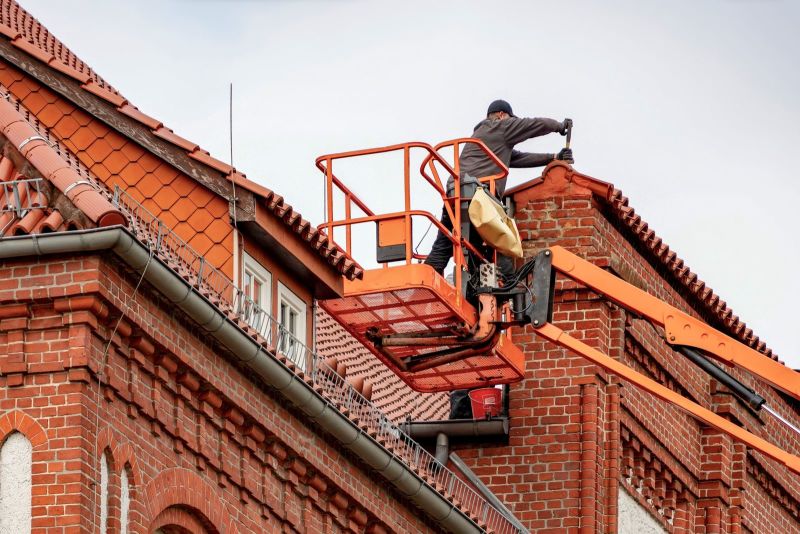
Ladder-access repairs sit lowest: replacing two to four slipped tiles is £160 to £300, refixing a loose ridge tile £150 to £280, and resealing a small flashing detail £180 to £350.
Work needing a tower or scaffold moves up. Repointing a full ridge line runs £520 to £1,050. Chimney flashing renewal in lead is £420 to £880. Renewing a valley is £650 to £1,400. Replacing a section of guttering with fascia is £450 to £1,100 per elevation.
Partial and full replacement: re-tiling one elevation of a semi is £2,600 to £5,200, and a full re-roof on a standard three-bedroom Warrington semi runs £6,800 to £12,000 with concrete interlocking tiles, more for slate. Scaffolding accounts for £600 to £1,300 of that. Northwest Roofing Contractors works across all three areas and will inspect before pricing rather than quoting a fault description over the phone.
Padgate: Interwar Clay and the Nail Sickness Problem
The 1920s and 1930s semis along the Padgate Lane and Manchester Road corridors mostly carry clay plain tiles or early concrete tiles on softwood battens, fixed with iron nails.
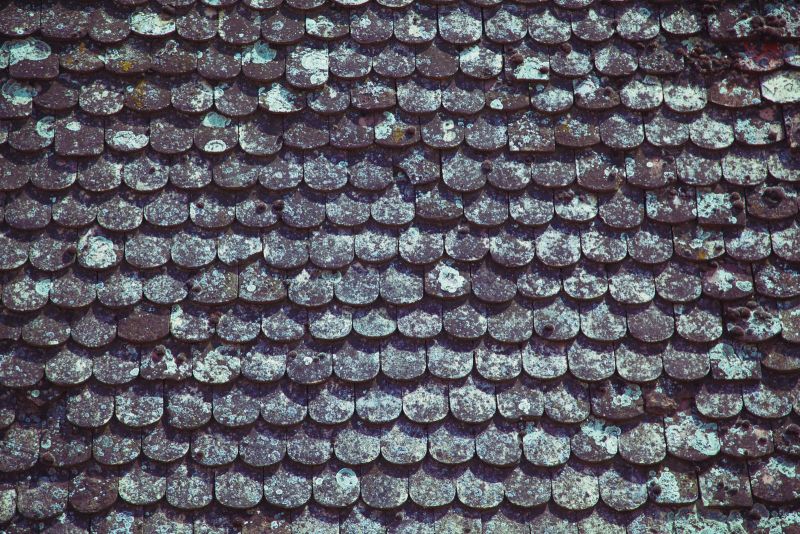
At 90 to 100 years old those nails are the failure point rather than the tiles. Iron corrodes, expands, and the tile loses its hold. The characteristic symptom is a roof that behaves fine for decades then loses eight or ten tiles across two consecutive winters, because the whole slope reaches the same point at roughly the same time.
There is a practical decision rule. If you are replacing fewer than about 10 tiles a year, patch. Once you pass 15% of a slope needing attention annually, the five-year cost of repairs exceeds re-tiling that elevation, and you are also paying for repeated scaffold hires.
The other Padgate-specific issue is torching. Many of these roofs originally had lime mortar torching under the tiles instead of felt. As it crumbles, debris falls into the loft and the roof loses its secondary weatherproofing. There is no repair for failed torching short of stripping and re-felting, which is one of the strongest arguments for re-tiling rather than continuing to patch.
Chimneys Need Watching Here Too
Interwar Padgate houses typically have two chimney stacks, and many are now redundant since the switch to gas central heating. An unused stack still gets rained on, and without warm flue gases drying it out, the mortar deteriorates faster than it did in use. Repointing a stack costs £450 to £950. Removing one down to below roof level and making good is £900 to £1,800, and taking it out entirely including the breast inside is £2,200 to £4,500.
Woolston: Post-War Stock and 1980s Concrete Tiles
Woolston splits into two jobs. The post-war council-built housing off Woolston Grange Avenue and around Poplars Avenue carries early concrete tiles, often Marley Ludlow or similar profiles from the 1950s and 60s. The 1970s and 80s private estates towards Woolston Park and Martinscroft carry later concrete interlocking tiles.

Concrete tiles do not fail the way clay does. They do not spall or delaminate much. What they do is lose their surface coating - the pigmented cement slurry that gives them their colour - typically after 25 to 35 years. Once the surface goes, the tile becomes porous, absorbs more water, gets heavier, and grows moss readily. A saturated concrete tile can weigh 15% to 20% more than a dry one, which matters on a roof structure designed to a 1960s loading standard.
That surface loss is not itself a leak, and this is where homeowners get pushed into unnecessary work. A porous, mossy, faded concrete tile roof that is not letting water in does not need replacing. What it needs is the moss dealt with, the valleys and flashings checked, and monitoring. Roof coating sprays sold as a restoration are widely oversold; they add a decorative surface that typically lasts five to ten years and can trap moisture underneath.
Low-Pitch Roofs and Driving Rain
Some Woolston estate housing was built with pitches around 17 to 22 degrees to suit interlocking tiles. That is within specification but leaves little margin. In driven rain with a strong south-westerly, water can be pushed back up the tile laps. If a low-pitch roof leaks only in specific wind conditions rather than in every downpour, this is usually why, and the fix is at the underlay and lap detail rather than the tile.
Birchwood: New Town Trusses and Flat Roof Extensions
Birchwood's housing dates mostly from 1975 to 1990 and was built with prefabricated trussed rafters, felt underlay, and concrete interlocking tiles. Structurally these roofs are sound and generally have decades left.
Two things go wrong. The first is the felt underlay. Bitumen-based type 1F felt embrittles with UV exposure and heat cycling, and after 30 to 40 years it cracks, particularly at the eaves where it drapes over the fascia. Once the felt tears at the eaves, water running down the underlay drips into the wall head rather than into the gutter. The symptom is damp at the top of an upstairs wall with no visible roof damage at all. Replacing the eaves felt with an eaves protection tray costs £280 to £650 per elevation.
The second is ventilation. New town-era roofs were built before roof ventilation requirements tightened, and many have no soffit or ridge vents at all. Add loft insulation to modern depth on an unventilated roof and you create condensation on the underside of the felt, which drips onto the insulation and gets mistaken for a leak. Retrofitting soffit vents and a ventilated ridge costs £450 to £1,100 and solves it.
Birchwood also has a large stock of flat-roofed extensions, garages and dormers from the same period. Original built-up felt has a 12 to 20 year life; anything original is decades past it. Replacement on a typical 15 square metre roof runs £1,100 to £1,800 in torch-on felt, £1,400 to £2,200 in EPDM rubber, or £1,600 to £2,600 in GRP.
Warrington's Weather and Why It Drives These Faults
Warrington sits in the Mersey basin and records roughly 800 to 850 mm of rain a year across about 145 wet days. Prevailing winds come from the south-west with an unobstructed run across the Cheshire plain, and winter gusts above 50 mph are a regular occurrence.
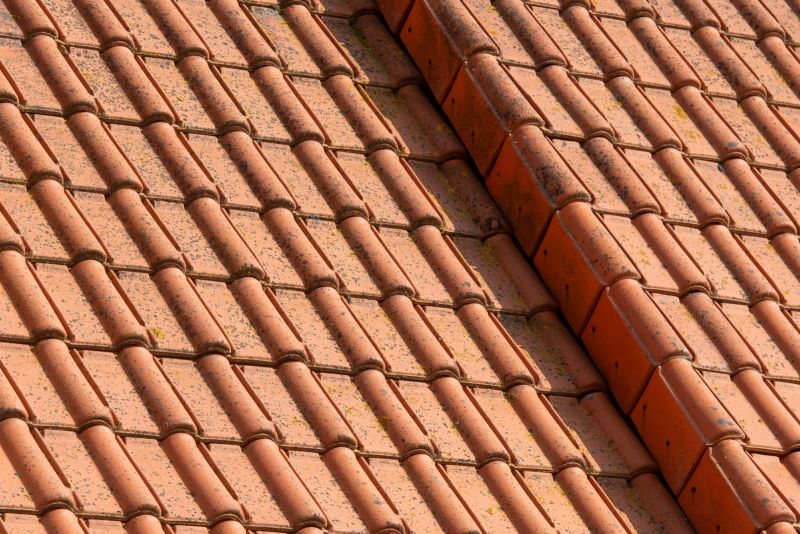
That combination is hard on two details specifically. Mortar-bedded ridge and verge, which cracks under thermal and wind movement and then admits water that freezes and widens the crack. And gutters, which in this rainfall have to shift real volumes - a 40 square metre roof slope in heavy Warrington rain can deliver over 30 litres a minute to a single downpipe.
Moss is the other consequence. High humidity and mild winters suit it, and the sheltered north-facing slopes across Padgate and Woolston grow it thickly. Moss itself does not damage a sound tile, but it holds water against the surface, blocks the tile laps, and washes into gutters. Scraping and treating a semi-detached roof costs £350 to £750. Pressure washing a concrete tile roof is usually a mistake - it strips whatever surface coating remains and forces water under the laps.
Deciding Between Repair and Replacement
The useful questions are not about age. A 60-year-old roof in good condition beats a 25-year-old one that was badly detailed.
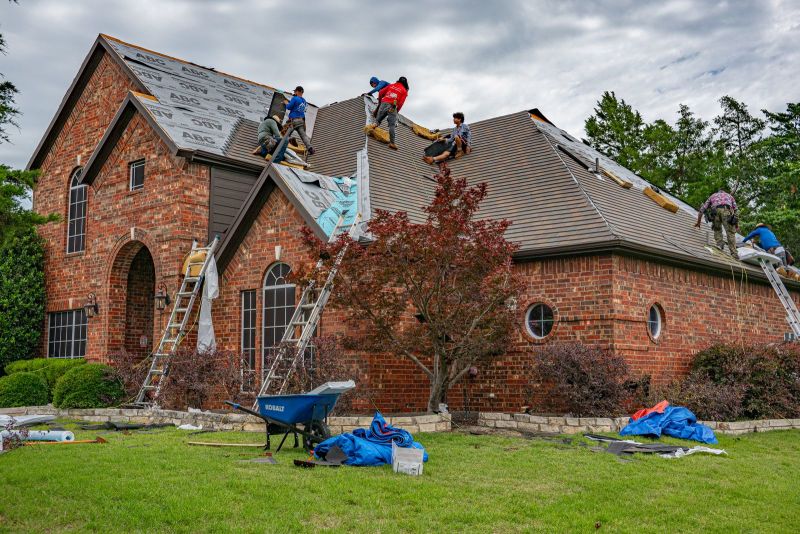
Ask instead: how many separate repairs in the last three years, and are they in different places? Repeated faults in different locations point to a systemic problem - nail sickness, failed underlay, or perished mortar throughout - and patching those is throwing money at a slope that has reached the end of its service life. Repeated faults in the same place point to a detailing error that should be fixed properly once.
Get a roof survey before committing to a re-roof. A proper inspection in Warrington costs £180 to £400 and includes the loft space, which is where underlay condition and ventilation are actually assessed. A survey from someone who is not quoting for the work is worth paying for.
On contractor choice, check public liability cover of at least £2 million, ask about membership of a body such as the National Federation of Roofing Contractors, and confirm whether a re-roof will be notified to Warrington Borough Council building control, which is required when more than 25% of a roof surface is replaced. We set out the full contractor vetting process in our Warrington roofing contractor checklist.
Frequently Asked Questions
How much does a roof repair cost in Padgate, Woolston or Birchwood?
Small ladder-access repairs such as replacing slipped tiles run £160 to £300, and refixing a ridge tile is £150 to £280. Work needing scaffold, such as repointing a ridge line or renewing chimney flashing, costs £420 to £1,050. Re-tiling one elevation of a semi is £2,600 to £5,200, and a full re-roof £6,800 to £12,000.
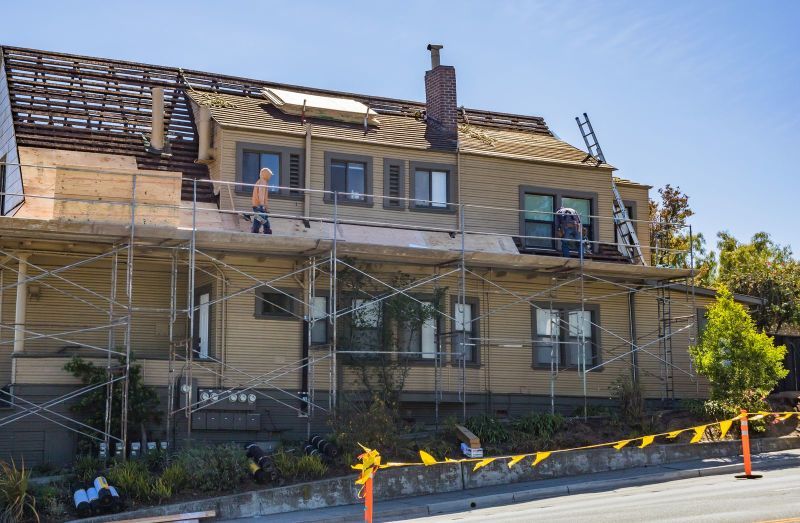
My concrete tiles have gone faded and mossy. Do I need a new roof?
Usually not. Concrete tiles lose their pigmented surface coating after 25 to 35 years, which makes them porous and moss-friendly but does not in itself cause leaks. If water is not getting in, the sensible response is moss treatment, a check of valleys and flashings, and monitoring. Spray-on roof coatings are widely oversold and can trap moisture.
Why is there damp at the top of my upstairs wall with no visible roof damage?
In Birchwood-era housing this is usually torn eaves felt. Bitumen underlay embrittles after 30 to 40 years and cracks where it drapes over the fascia, so water running down the underlay drips into the wall head rather than the gutter. Fitting an eaves protection tray costs £280 to £650 per elevation.
When is it worth re-roofing rather than repairing?
Once you are replacing more than about 15% of a slope each year, or when repairs keep appearing in different places rather than the same spot. Repeated faults across a whole slope indicate nail sickness, failed underlay or perished mortar throughout, and patching those costs more over five years than re-tiling the elevation.
Ready to work with us?
We're here to help. Give us a call on 01264 554568 or fill out our short form below.