Roof Work on Listed Buildings and in Conservation Areas in Warrington: Consent, Materials and Costs
Most roof work in Warrington needs no permission at all. Swap a few slipped tiles, re-bed a ridge, re-felt under the same covering, and nobody at the council needs to know. That changes if your house is listed or sits inside one of the borough's conservation areas. Warrington has 15 conservation areas listed on the council's heritage pages, from Lymm and Walton Village to Thelwall, Grappenhall, Culcheth and Stockton Heath, and the oldest of them dates back to 1971. Across England, about 2% of buildings are listed, and 91% of those are Grade II, which still covers the roof. Doing roof work on a listed building in Warrington without consent is a criminal offence with no time limit on enforcement, so it's worth getting right before the scaffold goes up. This guide covers what needs listed building consent, what needs planning permission, which materials the conservation officer will expect, and what it all costs.
Listed Building Consent vs Planning Permission: Which One Does Your Roof Need?
These are two separate permissions. People mix them up all the time, builders included.
Listed building consent applies only if the building itself is listed. It's needed for any work that affects the building's character as a building of special interest, inside or out. On a roof, that usually means changing the covering material, swapping slates for a different type, adding rooflights, removing or rebuilding chimneys, replacing cast iron gutters with plastic, or changing ridge and verge details. Even a careful like-for-like re-roof can need consent if a lot of historic fabric is being stripped and replaced. Small repairs using matching materials usually don't. "Usually" is doing a lot of work in that sentence, though, so ask first.
Planning permission is about development. In a conservation area that isn't listed, ordinary maintenance and like-for-like re-roofing generally doesn't count as development. What does need permission is anything that changes the roof's shape or external appearance in a way that permitted development rights don't cover: dormers, raising the roof, cladding, and some solar panels and satellite dishes on roof slopes facing a road.
If you're unsure which bucket your job falls into, the team at Northwest Roofing Contractors can look at the roof and tell you what the council is likely to want before you spend anything on drawings. The government's planning guidance on conserving and enhancing the historic environment sets out how councils are meant to judge these applications.
Warrington's Conservation Areas and Where the Extra Rules Bite
Warrington Borough Council publishes a guidance leaflet for each conservation area on its heritage and built environment evidence page, with a boundary map on the back. Check the map, not the postcode, because boundaries can split a street in two.
The areas on the list include:
- Lymm, which is actually three areas: the village centre (designated 1971), Eagle Brow and New Road (both 1973)
- Walton Village (1977)
- Thelwall Village (1977, extended in 1991 and 1993)
- Grappenhall Village, Grappenhall and Stockton Heath, and Stockton Heath
- Culcheth
- Several town centre areas, including Bewsey Street, Bridge Street, Buttermarket Street, Church Street, Palmyra Square, Town Hall, Winwick Street and the Greenalls Brewery area on Wilderspool Causeway
The council's leaflets say that in a conservation area, any alteration that materially changes the shape of the roof needs planning permission. So does cladding any part of the outside in stone, timber, plastic or tiles, and fitting a satellite dish on a chimney or a roof slope that faces a road.
Thelwall's Article 4 direction
Thelwall is the one to watch. In 1985 an Article 4 direction was placed over the historic core of the village. It removes permitted development rights for "the enlargement, improvement or other alteration of a dwelling", and that covers roof work most people would assume was fine. Inside the Article 4 boundary, replacing a slate roof with concrete tiles, fitting a rooflight or changing the ridge detail can all need full planning permission, even on an unlisted house. The Article 4 boundary is the thick dotted line on the council's Thelwall map, and it doesn't cover the whole conservation area. If you're inside it, assume you need to ask.
Like-for-Like Materials: What the Conservation Officer Will Expect
"Like for like" is the phrase you'll hear most from the council. It means matching what's already there in material, colour, size, texture and fixing method, not just picking something that looks a bit similar from the pavement.
Welsh slate
Most of Warrington's Victorian and Edwardian houses, including the big villas in the Lymm and Stockton Heath areas, were roofed in Welsh slate brought in by canal and rail. It's thin, blue-grey to purple, and lasts 100 years or more. Conservation officers will generally want Welsh slate replaced with Welsh slate, not cheaper imported slate. New Welsh slate costs roughly three times as much as Spanish, often £4 to £8 per slate against £1.50 to £3. Good reclaimed Welsh slate sits in between, at around £2.50 to £4.50 each.
Handmade clay tiles
Older cottages and farmhouses in Walton, Grappenhall and Culcheth often have handmade clay plain tiles in warm reds and browns. Machine-made tiles look too flat and too even next to them, and officers notice. Handmade clay plain tiles cost about £1 to £1.80 each, and you need around 60 per square metre, so £60 to £110 per m² for the tiles alone.
Stone flags
A few of the oldest farm buildings and cottages around the borough still carry heavy sandstone flag roofs. These weigh several times as much as slate, run in diminishing courses (big at the eaves, small at the ridge), and need a roofer who has actually laid them before. Re-laying a stone flag roof typically costs £250 to £450 per m², and sourcing matching reclaimed stone can add weeks.
Lime mortar matters too. Ridges, verges and chimney flaunching on pre-1900 buildings were bedded in lime, which flexes and breathes. Cement mortar traps moisture and cracks the masonry around it. Most officers will specify lime, and in practice it can't go on below about 5°C.
Roof Work That Almost Always Needs Consent
Some jobs are near-certain to need permission on a listed building, and several also need it in a conservation area. The common ones we price are:
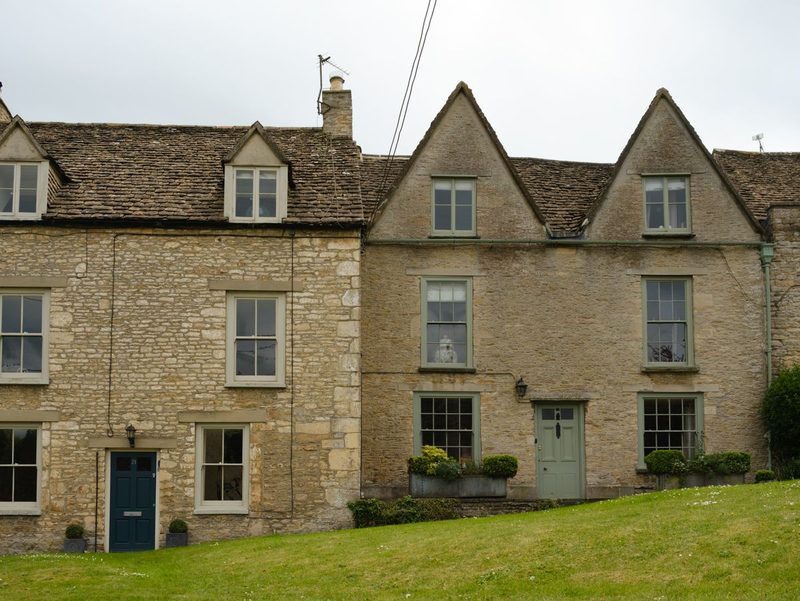
- Changing the roof covering, for example slate to concrete tile, or clay to slate
- Adding rooflights or roof windows, especially on a roof slope you can see from the road
- Removing, lowering or rebuilding a chimney stack
- Replacing cast iron gutters and downpipes with uPVC
- Adding a dormer or changing the roof shape in any way
- Insulating between rafters with modern membranes, which can change the roof height at the eaves and verges by 50 to 100mm
- Solar panels on a listed building, or on a roof slope fronting a highway in a conservation area
Things that usually don't need consent, even on a listed building, include replacing a handful of broken slates with exact matches, clearing gutters, re-fixing a slipped ridge tile in lime, and temporary emergency work to keep the weather out. Keep photos and a short written note of what was done and why. If the council ever asks, that record is your best defence.
When the work touches next door
Lots of listed and conservation area properties in Warrington are semis or terraces, so a re-roof or a chimney rebuild often touches a party wall. That's a separate legal process with its own notice periods. We've covered party walls and shared roofs in Warrington, including notices and who pays in a separate guide, and it's worth reading alongside this one if your chimney stack is shared.
Costs and Timescales for Heritage Roof Work in Warrington
Heritage roofing costs more. Most of the gap is materials and the time it takes to work in lime and lead by hand. Here's what we typically see on Warrington jobs in 2026:
- Listed building consent application fee: nothing, there's no council fee for it
- Householder planning application in a conservation area: around £500 to £600 in council fees
- Drawings, heritage statement and photo survey to support an application: £400 to £1,500, depending on how complex the building is
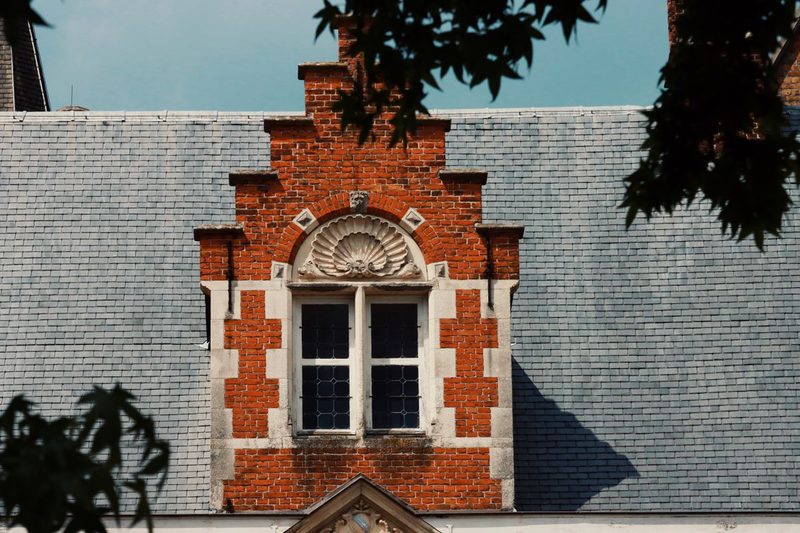
- Re-roofing a three-bed semi in new Welsh slate with lime-bedded ridges: roughly £16,000 to £26,000, against £9,000 to £14,000 for the same house in Spanish slate
- Re-roofing a small cottage in handmade clay plain tiles: about £14,000 to £22,000
- Rebuilding a chimney stack in matching brick and lime with lead flashings: £2,500 to £5,000
- Cast iron gutters and downpipes, like for like: £90 to £150 per metre fitted, about three to four times the price of plastic
Timescales are the other cost. The council's target for deciding listed building consent and householder applications is 8 weeks, and it's worth adding 2 to 4 weeks on top for pre-application advice, drawings and any back-and-forth over materials. Reclaimed Welsh slate in quantity, or matching stone flags, can take another 3 to 6 weeks to source. All told, 3 to 4 months from first phone call to scaffold is normal.
Weather, Timing and Finding a Heritage Roofer Around Warrington
Warrington sits in the Mersey valley, and while its rainfall of around 830mm a year is lower than the UK average of roughly 1,150mm, it's spread across 140 to 150 wet days. Long, damp spells from October to March are the norm. That matters more on heritage jobs than on modern ones. Lime mortar needs several days above 5°C with no frost to cure, and a stripped historic roof with original sarking boards or lath shouldn't be left exposed under sheeting for weeks.
The best window for heritage roof work here is April to September. Working back from that, if you want a summer start, the application should be in by early spring. Paperwork in winter, roofing in summer.
Then there's the labour. Roofing is already one of the trades the Construction Industry Training Board says is hardest to recruit for, and the pool of roofers in the North West who can lay stone flags, dress lead properly and work in lime is a small fraction of that. Good heritage roofers in the Warrington, Cheshire and Lancashire area are often booked 2 to 4 months ahead in summer. Ask any roofer you're considering for photos of past listed or conservation area jobs, and whether they've dealt with a conservation officer before.
What Happens If You Get It Wrong
This is where the two regimes really part company, and the difference is bigger than most people expect.
Unauthorised work on a listed building
Carrying out works to a listed building without consent, where consent was needed, is a criminal offence under section 9 of the Planning (Listed Buildings and Conservation Areas) Act 1990. The maximum penalty is up to two years in prison and an unlimited fine. It doesn't matter whether you knew the building was listed. It's also the owner's problem, not just the roofer's, and there is no time limit. A council can serve a listed building enforcement notice on work done 20 years ago, and the liability passes to whoever owns the house now. That's why buyers' solicitors ask about it.
In practice, most cases end with an enforcement notice requiring the work to be put back. Re-stripping a concrete tile roof and re-covering it in Welsh slate can easily cost £15,000 to £25,000 on top of what you already paid.
Unauthorised work in a conservation area
Here it's a planning breach, not a crime in itself. The council can serve an enforcement notice, and ignoring one is an offence. Since April 2024, the time limit for enforcing most planning breaches in England has been 10 years, up from 4 years for many householder breaches before that. You can apply for retrospective permission, and some unauthorised changes do get approved, but there's no guarantee.
Either way, you'll be asked about it when you sell. Unauthorised changes to a listed building can stall a sale or knock thousands off the price.
Common Questions About Listed Building and Conservation Area Roof Work in Warrington
Do I need permission to replace a few broken slates on a listed building in Warrington?
Usually not, as long as you replace them with matching slates fixed the same way. Small, like-for-like repairs don't normally affect a listed building's character. Anything beyond a handful of slates, or any change of material, should be checked with Warrington Borough Council's conservation team first.
Can I re-roof my house in Lymm or Walton in a different material?
If the house is unlisted and in a conservation area, changing the covering may not need planning permission unless it materially alters the roof's appearance, but the council can and does object to visible changes. If the house is listed, or you're inside the Thelwall Article 4 area, you'll need consent or permission.
How long does listed building consent take in Warrington?
The target decision time is 8 weeks from a valid application. Allow 3 to 4 months overall once you add pre-application advice, drawings and sourcing matching materials such as reclaimed Welsh slate.
What happens if previous owners did unauthorised roof work on my listed home?
There's no time limit on listed building enforcement, so the council can still require it to be reversed, and the responsibility passes to you as the current owner. Talk to the council's conservation officer early. Retrospective consent is sometimes possible if the work is sympathetic.
Ready to work with us?
We're here to help. Give us a call on 01264 554568 or fill out our short form below.