
Selling a House in Warrington With a Tired Roof: What to Fix and What to Disclose
Most people only think seriously about their roof when they are buying a house. The seller's version of that conversation happens about six weeks later, usually over the phone, usually beginning "the survey's come back and they want four grand off." Roof defects are one of the three most commonly reported items on RICS Home Surveys, appearing on something like 60 - 70% of Level 2 reports on properties over thirty years old. In Warrington, where a large share of the housing stock is 1930s semis, post-war council-built terraces and 1970s estate housing, that hit rate is if anything higher. The average price reduction negotiated off the back of a roofing defect sits somewhere around £2,000 - £5,000, and it is very often two or three times what the actual repair would have cost. Here is how to be on the right side of that.
What Warrington Surveyors Actually Flag
Surveyors are not roofers, and that shapes what ends up in the report. A Level 2 or Level 3 survey inspection of the roof is almost always carried out from ground level with binoculars, and from inside the loft hatch. That means the report is built from what is visible and what is inferrable, and the language reflects the uncertainty.

The items that come up most on Warrington properties, roughly in order: slipped or displaced tiles, defective mortar on ridge and hip lines, sagging or uneven roof planes, perished or absent underfelt visible at the eaves, blocked or sagging guttering, defective lead flashings at chimneys and abutments, and evidence of past or active water ingress in the loft.
The phrase that costs sellers money is the one surveyors use when they cannot see enough: "further investigation by a qualified roofing contractor is recommended before exchange." That sentence is an open door for a buyer to ask for a large, unquantified reduction, because nobody has established what the fix actually costs. Closing that door before the buyer's surveyor ever opens it is the whole strategy here, and a straightforward pre-listing assessment from Northwest Roofing Contractors usually costs a fraction of the reduction it prevents.
Why "Category 3" Matters More Than the Words
RICS Home Survey reports use a traffic light condition rating. Category 1 is no repair needed. Category 2 means defects needing repair or replacement but not urgently. Category 3 means serious defects, urgent repair, or defects the surveyor could not fully assess. A Category 3 on the roof is what triggers lender questions, retention requests and renegotiation. The RICS publishes what each survey level covers, and it is worth understanding before you assume a buyer's demand is reasonable.
The Repairs Worth Doing Before You List
Not everything is worth fixing. The test is simple: will this repair cost less than the reduction a buyer would ask for, and will it move the roof from Category 3 to Category 2 or 1?
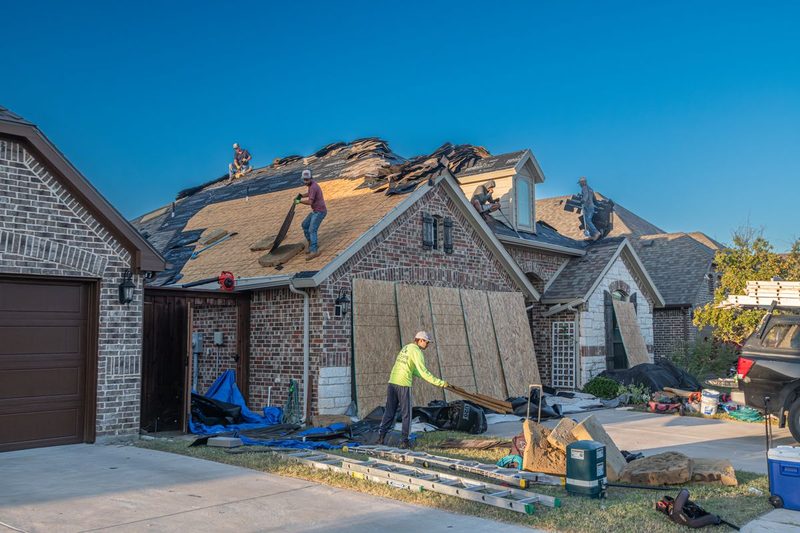
Slipped and cracked tiles almost always pass that test. A handful of tiles is £120 - £300 in Warrington, and a visible gap in a roof plane is the single most photographed defect in any survey report. Fixing it removes an obvious, easily identified flaw for very little money.
Ridge and hip mortar is the next best value. Warrington's interwar semis across Latchford, Grappenhall and Orford were almost universally built with mortar-bedded ridge lines, and after eighty-odd years a lot of it is failing. Repointing runs £25 - £45 per metre, a full re-bed £45 - £80 per metre. On a typical 9-metre semi ridge that is £225 - £720, against a buyer's likely £1,500 - £2,500 ask once a surveyor writes "defective ridge mortar throughout."
Guttering and fascias are cosmetic to a surveyor but psychological to a buyer. Sagging gutters and rotten fascia boards read as neglect and colour how the buyer sees everything else in the house. Replacing a full run of gutters, fascias and soffits on a semi costs £900 - £1,800 in Warrington and it is one of the few roofline jobs that genuinely changes how a property photographs.
What Is Usually Not Worth Doing
A full re-roof before sale rarely pays for itself. A new roof on a Warrington semi costs £6,000 - £11,000 depending on size, material and whether the battens and felt need replacing. You will not recover that in sale price. Buyers do not pay a premium for a new roof, they simply stop asking for a discount - and the discount they would have asked for is usually smaller than the job.
The same logic applies to a flat roof over a garage or extension. If it is not currently leaking, patching and documenting is better economics than replacing. If it is leaking, that is different, because an active leak must be disclosed and will be found.
Getting Your Own Survey First
The single most effective move is commissioning your own roofing inspection before the property goes on the market. It costs £120 - £250 in Warrington for a written report, and it changes the negotiation in three ways.

You find out what is actually wrong, in trade terms, with a costed schedule. You get to decide which items to fix and which to leave. And when the buyer's surveyor writes something vague, you have a specific, dated, professional report to put against it rather than arguing from a position of knowing nothing about your own roof.
A buyer asking for £4,000 because a surveyor said "further investigation recommended" is in a very different position when you hand over a report from an NFRC-registered contractor saying the roof needs £650 of work, here is the itemised list, here are the photographs. Most of those requests collapse immediately. We have written about what a proper inspection covers in our guide to roof survey costs in Warrington and when you need one.
You can check a contractor's credentials through the National Federation of Roofing Contractors or TrustMark, and a report from a registered firm carries far more weight in a negotiation than one from an unvetted trader.
What You Are Legally Required to Disclose
This is the part where sellers get themselves into genuine trouble, and the rules are stricter than most people assume.

The TA6 Property Information Form, which your conveyancer will ask you to complete, includes direct questions about the condition of the property, any works carried out, any guarantees, and any known defects or disputes. Answering those questions dishonestly is misrepresentation, and a buyer who discovers a concealed defect after completion can pursue you for the cost of putting it right - sometimes years later.
What must be disclosed: any known active leak, any past leak and what was done about it, any roofing work carried out and whether it had Building Regulations approval where required, any guarantee or warranty on previous work and whether it is transferable, and any dispute with a neighbour over a shared roof, party wall or shared guttering.
What does not need disclosing: general age-related wear you are aware of but which has caused no problem. You are not required to volunteer that your roof is fifty years old. You are required not to lie about it if asked directly.
Painting Over a Damp Patch Is a Bad Idea
Obvious, but it happens constantly. A freshly painted loft ceiling or a single bright white patch on an otherwise yellowed ceiling is one of the first things an experienced surveyor looks for, and they will note it. It converts a straightforward repair conversation into a trust problem, and buyers who think they are being misled either walk away or ask for far more than the defect warrants.
Warrington-Specific Factors That Affect the Negotiation
Warrington's housing stock has a few characteristics that come up repeatedly in survey reports and are worth knowing about before you get blindsided.

Concrete interlocking tiles from the 1960s and 1970s are everywhere on the Birchwood, Woolston and Padgate estates. They have a design life of roughly 40 - 60 years and a huge number of them are now at or past the point where surface delamination starts showing. A surveyor spotting spalling concrete tiles will flag the whole roof, even where only a portion is affected.
Chimney stacks on the older terraces through Bewsey, Orford and Latchford are frequently redundant, and redundant stacks deteriorate faster than used ones. Repointing a stack is £300 - £700 and a full rebuild from roof level is £900 - £2,200 including scaffold.
The climate is not helping. Warrington sits in one of the wetter parts of England, around 800 - 850mm of rain annually across roughly 150 wet days, and the low-lying Mersey corridor holds humidity. Moss and algae growth on north-facing slopes is heavier here than the national average, and while moss itself is not structurally damaging, a moss-covered roof photographs badly and reads as neglected in a survey report. A moss removal and gutter clearance at £250 - £500 before listing is probably the highest return-per-pound presentation job available on a Warrington roof.
There is also a supply factor. Roofing capacity across Cheshire and Merseyside is reasonably good, but the sector has an ageing workforce nationally, and the gap between booking and completion stretches to three or four weeks from October onwards. If you are listing in autumn, get the roof work done before the listing rather than trying to fit it into a six-week conveyancing window.
Handling the Retention Request When It Comes
Sometimes it comes anyway. Here is how to respond without simply conceding.

Ask for the specific wording in the survey. Not a summary from the estate agent, the actual paragraph. Very often the report says something far softer than what has been relayed, and "some slipped tiles were noted" has travelled through two intermediaries to arrive as "the roof needs replacing."
Get a costed quote for exactly the defects named. Not a general roof quote, a line-by-line response to the surveyor's list. Then offer one of three things: carry out the work before completion and provide the invoice and guarantee, reduce the price by the actual quoted cost, or split the difference where the defect is genuinely uncertain.
What you should resist is a round-number reduction detached from any quote. If a buyer asks for £5,000 and the itemised trade cost is £900, the gap is negotiation, not repair. Having your own pre-listing report in hand is what lets you say so with a straight face.
Frequently Asked Questions
Should I replace my roof before selling my house in Warrington? Usually not. A full re-roof on a Warrington semi costs £6,000 - £11,000 and buyers do not pay a premium for a new roof, they just stop asking for a reduction. Since the typical roofing-related reduction is £2,000 - £5,000, the maths rarely works. Targeted repairs - slipped tiles, ridge mortar, guttering - give a far better return because they remove the visible defects a surveyor photographs.

What do I legally have to disclose about my roof when selling? Anything you know about: active leaks, past leaks and what was done, any roofing work carried out and whether it had Building Regulations approval, transferable guarantees, and any dispute with a neighbour over a shared roof or guttering. This goes on the TA6 Property Information Form. You do not have to volunteer that the roof is old, but answering dishonestly is misrepresentation and a buyer can pursue you after completion.
How much does a pre-sale roof inspection cost in Warrington? £120 - £250 for a written report with photographs and a costed schedule of works. It is frequently the best value spend in the whole sale process, because it converts a vague "further investigation recommended" in the buyer's survey into a specific, professionally documented figure - which typically collapses an inflated retention request.
A buyer wants £4,000 off for the roof. What should I do? Ask to see the exact survey wording rather than a relayed summary, then get a line-by-line costed quote for the specific defects named. Offer to either do the work before completion with invoice and guarantee supplied, or reduce by the genuine quoted cost. Resist round-number reductions that are not tied to a quote - the gap between a £4,000 ask and a £900 trade cost is negotiation, not repair.
Why do so many Warrington survey reports flag roof problems? The housing stock. A large proportion of Warrington homes are 1930s semis with mortar-bedded ridges now eighty years old, and 1960s - 1970s estate housing with concrete interlocking tiles at the end of their 40 - 60 year design life. Add roughly 800 - 850mm of annual rainfall and heavy moss growth on north-facing slopes in the Mersey corridor, and there is usually something visible for a surveyor to note.
Ready to work with us?
We're here to help. Give us a call on 01264 554568 or fill out our short form below.