
Roof Repairs in Winter in Warrington: What Can and Can't Be Done in Cold and Wet Weather
Warrington gets around 830mm of rain a year across roughly 145 wet days, and about 45 nights of air frost, most of them packed into a twelve-week stretch from December to February. In the same period the working day shrinks to about seven and a half hours of daylight, of which maybe six are usable on a roof. So when a tile comes off in November and someone tells you the repair has to wait until April, they're half right. Some roof work genuinely cannot be done in cold or wet weather without failing. Plenty can, and leaving a leak running for four months costs far more than the repair would have. This is which is which.
Work That Carries On Regardless of the Weather
A surprising amount of roofing is mechanically fixed rather than chemically bonded, and mechanical fixings don't care what the thermometer says.

- Replacing slipped or broken tiles and slates. Nailed, clipped or hooked. Fine in any temperature, provided the roof is safe to walk.
- Lead flashing and soakers. Lead is dressed cold by definition. Welding needs a bit of shelter from wind and rain, but nothing seasonal stops it.
- Dry ridge and dry verge systems. Screwed and clipped, no mortar involved. This is exactly why they exist.
- Gutter, fascia and soffit replacement. uPVC becomes slightly more brittle below about 5°C so it needs handling carefully, but the work itself is fine.
- Emergency weatherproofing. Tarpaulins, temporary covers, sealing a hole. Always available, always the right first move.
- Roof inspections and surveys. Winter is arguably the best time, because a leak in December tells you far more than a dry roof in June.
If something is actively letting water in, none of the seasonal caveats apply - you get it stopped now and do the permanent fix when conditions allow. Getting a roofer out to look at it in the week it starts is always cheaper than in the week the ceiling comes down.
Work That Genuinely Has to Wait
Three materials in roofing are chemically cured or set, and all three have hard temperature limits.

Mortar. Bedding mortar should not be laid when the air temperature is below 3°C and falling, or on a surface that is frozen. Mortar that freezes before it sets never reaches full strength - it stays friable, crumbles within a season or two, and the ridge tiles it was holding come loose in the next gale. That makes traditional mortar-bedded ridge and verge work a genuinely bad idea through a Warrington January. The workaround is a dry-fix system, which is mechanical and can go on the same day.
GRP (fibreglass) flat roofs. The resin needs a substrate temperature above roughly 5°C to cure properly, and an absolutely dry deck. Catalyst ratios can be adjusted for cold weather to a point, but no amount of adjustment fixes a damp board. A GRP roof laid over trapped moisture will blister, and that's a full strip-and-relay, not a repair.
EPDM and adhered single-ply. Contact adhesives and water-based deck adhesives have minimum application temperatures, typically around 5°C. Below that the bond doesn't develop, and the failure shows up as lifting at the perimeter the first time it blows hard.
Torch-on felt sits somewhere in between. It can be applied in cold weather because the heat comes from the torch, but it cannot be applied to a wet or frosted deck. On a dry, cold February day it's viable. On a damp one it isn't.
Repair Now or Replace in Spring?
Winter often forces this question, because a roof that's failing in bad weather is the one you notice. The honest answer usually depends on how much of the covering is at the end of its life rather than how cold it is. We've set out how to weigh that up in our guide to deciding between roof repair and replacement in Warrington, including the point at which patching stops being economic.
The Wind Problem, Which Matters More Than the Cold
Temperature stops specific materials. Wind stops everything.

Most roofing contractors come off the roof when sustained wind reaches around 23mph, and nobody sensible is on a scaffold above 30mph. The HSE's guidance on roof work is clear that weather conditions have to be factored into the risk assessment, and a roofer who ignores that is a roofer you don't want on your house.
Warrington's position matters here. The town sits on the Mersey plain with very little shelter to the west, which means Atlantic systems arrive with their wind speed largely intact. The exposed estates - Chapelford, Westbrook, Great Sankey, Birchwood - feel this more than the sheltered older streets around Latchford and Stockton Heath. Over a typical December and January, a contractor can lose eight to twelve working days to wind alone.
This is the real reason winter jobs run long. Not that the work is harder, but that the calendar is full of days nobody can work.
What Winter Actually Does to a Warrington Roof
Understanding the damage mechanism helps you judge urgency.
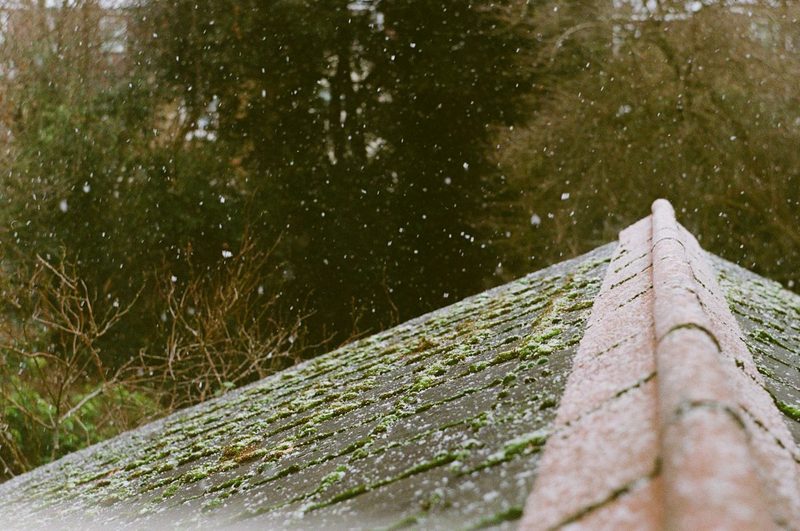
Freeze-thaw. Water gets into a hairline crack in a tile, a mortar joint or a slate, freezes, expands by about 9%, and widens the crack. Warrington's 45-ish frost nights are mostly marginal - hovering around zero rather than sitting well below it - which is the worst case, because it means repeated cycles rather than one long freeze. A cracked tile in October is frequently a broken tile in March.
Saturation weight. A waterlogged flat roof deck can carry a surprising load, and ponded water that then freezes puts a solid sheet of ice on a structure never designed for it.
Wind uplift on already-loose components. A ridge tile that's slightly loose in September is the one that comes off in the first named storm.
Condensation. Cold roof spaces plus warm damp air from the house below equals water forming on the underside of the felt. People find this in January and assume it's a leak. It often isn't, and the fix is ventilation rather than roofing.
What to Do If You Find a Leak in December
A practical sequence:
1. Contain it inside first. Bucket, and if the ceiling is bulging, pierce it deliberately at the lowest point with a screwdriver to let the water out in a controlled place. A bulging ceiling that collapses does far more damage than a small hole. 2. Get power away from it. If water is anywhere near a light fitting or ceiling rose, turn that circuit off. 3. Photograph everything , inside and out, with dates. If it turns into an insurance claim you'll need it. 4. Call for a temporary fix , not a permanent one. A properly fixed tarpaulin or a temporary patch costs £120 to £300 and buys you until conditions allow a proper repair. 5. Book the permanent repair for the first suitable window. Don't let it drift to spring by default.
The Cost Side: Is Winter More Expensive?
Mixed, and it depends entirely on which kind of job you're booking.

Emergency call-outs cost more in winter - typically £150 to £280 for an out-of-hours attendance against £90 to £150 in summer - simply because demand spikes during storms and everyone wants someone the same afternoon.
Planned work is often cheaper. January and February are the quietest months for booked roofing work in the North West, and contractors who'd have a four-week wait in June frequently have capacity next week. If your job is one of the weather-tolerant categories above, you can get a better price and a faster start.
Scaffolding hire runs longer , which costs. A job that would need two weeks of scaffold in July may need four in January because of lost days, and hire is usually charged by the period.
Ballpark winter repair figures for Warrington in 2026: replacing a handful of slipped tiles £160 to £320, a lead flashing repair £280 to £650, dry ridge conversion on a semi £700 to £1,400, temporary weatherproofing £120 to £300.
The Sensible Plan
If the roof is leaking now, act now. Containment and a temporary fix are always available, whatever the weather, and waiting causes the expensive damage - saturated insulation, stained plasterboard, rotted joist ends.
If the roof isn't leaking but you know work is needed, use winter to get it surveyed and quoted, and book the weather-dependent elements for March onwards. Contractors following the standards set out by the National Federation of Roofing Contractors will tell you plainly which parts of your job can be done in February and which shouldn't be. A roofer who claims they can lay a GRP roof in a Warrington January whatever the forecast is telling you something useful about how they work.
Frequently Asked Questions
Can roof repairs be done in winter in Warrington?
Many can. Replacing slipped tiles and slates, lead flashing work, dry ridge and dry verge systems, guttering, and all emergency weatherproofing can be carried out year-round. What has to wait is anything that cures or sets: mortar bedding below 3°C, GRP fibreglass below about 5°C, and adhered EPDM below about 5°C or on a damp deck.
Why won't a roofer bed ridge tiles in mortar during a Warrington winter?
Mortar that freezes before it has set never develops full strength. It stays crumbly and fails within a season or two, taking the ridge tiles with it in the next storm. Where ridge work is urgent in cold weather, a mechanically fixed dry ridge system is the right answer, and it typically costs £700 to £1,400 on a semi.
How much does an emergency roof repair cost in Warrington in winter?
An out-of-hours emergency attendance typically runs £150 to £280, against £90 to £150 in the quieter months. Temporary weatherproofing such as a fixed tarpaulin or a short-term patch usually costs £120 to £300 and buys time until a permanent repair is possible.
Is winter a bad time to get roofing work quoted?
No - it is arguably the best time. Leaks and defects are visible in wet weather in a way they are not in June, and January and February are the quietest booking months for North West contractors, so you often get a faster start and a keener price on weather-tolerant work.
What should I do first if my roof leaks in the middle of a storm?
Contain the water inside, turn off any electrical circuit near the leak, and if a ceiling is bulging, pierce it deliberately at the lowest point so the water drains where you choose. Photograph everything, then call for temporary weatherproofing rather than a permanent repair. Nobody should be going onto a roof while a storm is still blowing.
```json { "@context": "https://schema.org", "@type": "FAQPage", "mainEntity": [ { "@type": "Question", "name": "Can roof repairs be done in winter in Warrington?", "acceptedAnswer": { "@type": "Answer", "text": "Many can. Replacing slipped tiles and slates, lead flashing work, dry ridge and dry verge systems, guttering, and all emergency weatherproofing can be carried out year-round. What has to wait is anything that cures or sets: mortar bedding below 3°C, GRP fibreglass below about 5°C, and adhered EPDM below about 5°C or on a damp deck." } }, { "@type": "Question", "name": "Why won't a roofer bed ridge tiles in mortar during a Warrington winter?", "acceptedAnswer": { "@type": "Answer", "text": "Mortar that freezes before it has set never develops full strength. It stays crumbly and fails within a season or two, taking the ridge tiles with it in the next storm. Where ridge work is urgent in cold weather, a mechanically fixed dry ridge system is the right answer, and it typically costs £700 to £1,400 on a semi." } }, { "@type": "Question", "name": "How much does an emergency roof repair cost in Warrington in winter?", "acceptedAnswer": { "@type": "Answer", "text": "An out-of-hours emergency attendance typically runs £150 to £280, against £90 to £150 in the quieter months. Temporary weatherproofing such as a fixed tarpaulin or a short-term patch usually costs £120 to £300 and buys time until a permanent repair is possible." } }, { "@type": "Question", "name": "Is winter a bad time to get roofing work quoted?", "acceptedAnswer": { "@type": "Answer", "text": "No, it is arguably the best time. Leaks and defects are visible in wet weather in a way they are not in June, and January and February are the quietest booking months for North West contractors, so you often get a faster start and a keener price on weather-tolerant work." } }, { "@type": "Question", "name": "What should I do first if my roof leaks in the middle of a storm?", "acceptedAnswer": { "@type": "Answer", "text": "Contain the water inside, turn off any electrical circuit near the leak, and if a ceiling is bulging, pierce it deliberately at the lowest point so the water drains where you choose. Photograph everything, then call for temporary weatherproofing rather than a permanent repair. Nobody should be going onto a roof while a storm is still blowing." } } ] } ```
```json { "@context": "https://schema.org", "@type": "Article", "headline": "Roof Repairs in Winter in Warrington: What Can and Can't Be Done in Cold and Wet Weather", "description": "Which roof repairs can actually be carried out through a Warrington winter, which ones have to wait for spring, why mortar and GRP fail in the cold, and what you should do in the meantime.", "author": { "@type": "Organization", "name": "The Team" }, "datePublished": "2026-09-15", "dateModified": "2026-09-15", "articleSection": "Roof Repairs" } ```
Ready to work with us?
We're here to help. Give us a call on 01264 554568 or fill out our short form below.