Asbestos Garage and Shed Roofs in Warrington: How to Identify Them and What Removal Costs
Warrington was designated a New Town in 1968, and the building boom that followed ran straight through the period when corrugated asbestos cement was the default material for anything you didn't heat. Between roughly 1950 and 1985, most detached garages, sheds, lean-tos and coal stores in Britain got one. The Health and Safety Executive estimates asbestos is still present in around 1.5 million UK buildings, and cement sheeting is by far the most common form left in domestic settings. In Padgate, Orford, Westbrook, Birchwood and the older parts of Latchford you can stand in almost any back alley and count them on the skyline. These roofs reach about 50 to 60 years of service life, which means a very large number across Warrington are failing right now. Here's how to tell what you've got and what dealing with it properly costs.
How to Recognise Asbestos Cement Sheeting
Asbestos cement is not the fibrous, fluffy material people picture. It's a hard, grey, cement-based board with about 10 to 15% chrysotile asbestos bound into it, and it looks unremarkable.
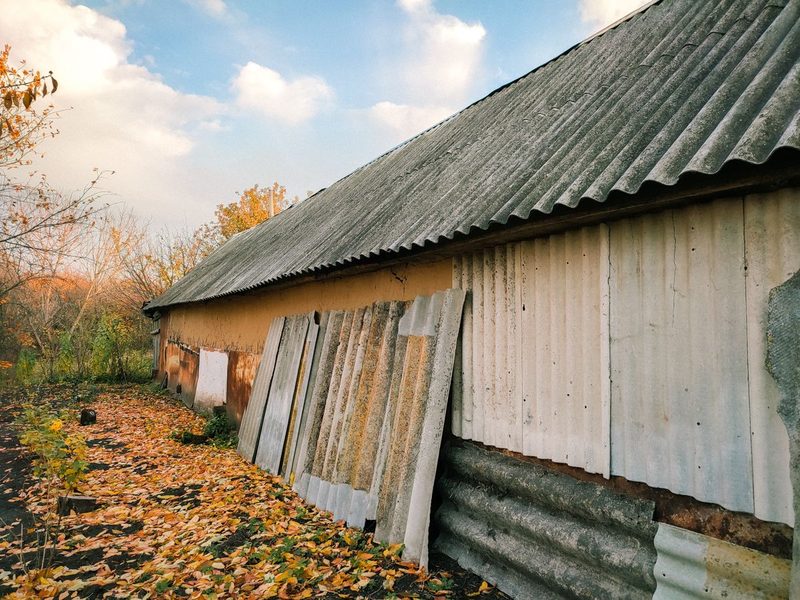
The visual clues are consistent. Corrugated profile, usually the classic small six-inch wave or the deeper "Big Six" profile. Grey, weathering to a mottled green-black with moss and lichen after thirty years. Roughly 6mm thick. Cut edges look slightly fibrous and chalky rather than smooth. Fixings are hook bolts or drive screws through the crown of the corrugation with a little bitumen washer, not modern EPDM-sealed screws.
Age is the strongest indicator. If the garage went up before 1985 and the roof has never been replaced, treat it as asbestos until proven otherwise. Corrugated sheeting containing asbestos was not banned in the UK until 1999, though most manufacturers had moved to fibre cement by the late 1980s.
What It Isn't
Modern fibre cement sheeting looks nearly identical and is completely safe. It's typically brighter grey, often slightly thinner, and will usually carry a printed manufacturer's stamp on the underside near the eaves.
Bitumen corrugated sheets, the Onduline type, are obviously different: flexible, often black, brown or green, and light enough to flex when you push them. Galvanised steel is metallic and dents. Only cement-based grey corrugated sheet on a pre-1985 building is the concern.
If you can't tell from the ground, don't climb up and snap a corner off to look. A sample test through a UKAS-accredited lab costs £30 to £60 and takes a few days, and a roofer who handles this regularly can usually tell you what you're looking at from a short site visit without any of that.
What the Law Lets a Homeowner Do
This surprises people in both directions. Asbestos cement sheeting is classed as non-licensed work, which means a competent person can remove it without an asbestos licence, and that legally includes a homeowner working on their own domestic property.
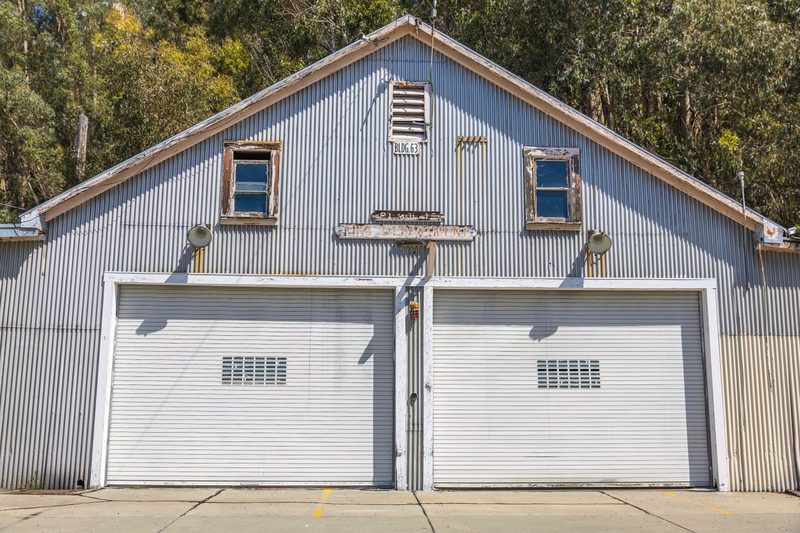
But the Health and Safety Executive's asbestos essentials guidance sets out how it has to be done, and the method is strict. Sheets must be removed whole, never broken. No power tools, no angle grinders, no sanding, no dropping sheets to the ground. The surface is wetted first to suppress fibres. Fixings are cut or unbolted individually. Each sheet is double-wrapped in heavy polythene and taped, and labelled as asbestos waste. Disposable coveralls, a fitted FFP3 mask and gloves throughout.
The moment sheeting is broken, drilled, cut or scraped, fibre release goes up by orders of magnitude. That is the entire risk. An intact asbestos cement roof sitting on a Warrington garage is releasing essentially nothing and is safe to leave alone. A homeowner putting a boot through it while clearing moss is a different situation.
Where a licence genuinely is required: sprayed coatings, lagging, and asbestos insulating board in poor condition. None of those are garage roofs, but AIB does turn up as garage soffits, eaves panels and internal linings, so it's worth having the whole structure assessed rather than just the sheets.
What Removal and Replacement Costs in Warrington in 2026
A single garage is about 18 to 22 square metres of roof. Costs across the Warrington area this year:
- Professional removal and licensed disposal only, single garage roof: £550 to £950
- Removal plus new corrugated fibre cement or box-profile steel roof: £1,300 to £2,200
- Removal plus EPDM or GRP flat roof conversion where the structure allows: £1,900 to £3,200
- Full demolition and removal of an asbestos-roofed garage, including the walls and base breakout: £1,600 to £3,400
- Small shed or lean-to roof, under 10 square metres: £350 to £600
- Asbestos survey or sample test alone: £30 to £60 per sample, £200 to £400 for a full refurbishment survey
The disposal element is a fixed cost that doesn't scale down much. Hazardous waste consignment, the specialist landfill gate fee and the paperwork run £180 to £350 on even a small job, which is why removing a shed roof costs more per square metre than a garage.
Access changes things too. A garage at the end of a shared back alley in Orford, where sheets have to be carried 40 metres to a van, will sit at the top of those ranges. One on a driveway you can back a van onto sits at the bottom.
Getting Rid of It: Disposal in Warrington
You cannot put asbestos in a skip, a wheelie bin, or a general builders' waste collection, and no licensed carrier will accept it mixed with anything else.
Warrington Borough Council's household waste recycling centres accept limited quantities of bonded asbestos from householders, but it is a booked, conditional service rather than a turn-up-and-tip one: quantities are capped, the material must be double-wrapped and sealed before it arrives, and you need to arrange it in advance. Check the current terms with Warrington Borough Council before you load anything into a car, because the rules have tightened over recent years and turning up unannounced with a wrapped garage roof will not go well.
For anything more than a couple of sheets, a contractor handling it is simpler. What you should get back is a hazardous waste consignment note showing the carrier, the quantity, the EWC code and the receiving site. Keep it. It's the document that proves the material went where it was supposed to, and a buyer's solicitor may ask for it years later.
One thing to avoid entirely: the cheap quote from someone who'll "take it away for cash". Asbestos is expensive to dispose of legally and cheap to fly-tip, and the disposal cost is exactly what the low quote has removed. As the waste producer, you carry the liability when it turns up in a lay-by on the A574.
Should You Replace the Roof or the Whole Garage?
Warrington's older garages divide fairly cleanly into two groups, and the decision usually makes itself once you look at the walls.
Prefabricated concrete sectional garages, the ones built from interlocking precast panels with a steel or concrete frame, were everywhere on 1960s and 1970s estates. Many are now past useful life: panels spalling, frames rusting, doors dropped. On these, replacing just the roof is often money spent on a building that has five years left. Full replacement with a new sectional or brick garage runs £4,500 to £11,000 and resets the clock.
Brick or block-built garages are a different proposition. The structure is usually sound at 60 years old and worth keeping, so removing the asbestos sheets and re-roofing is the sensible spend. Our guide to garage roof replacement in Warrington covers the material options once the asbestos is off.
Check the purlins before committing either way. Timber purlins that have carried a leaking asbestos roof for two decades are frequently rotten at the wall bearings, and that's £200 to £500 of additional work that nobody quotes for until the sheets come off.
Why Warrington's Weather Finishes These Roofs Off
Warrington averages a little over 800mm of rain a year, roughly double what the driest eastern counties get, and it sits in a broad low-lying river valley where fog and prolonged damp are normal from October through to March.
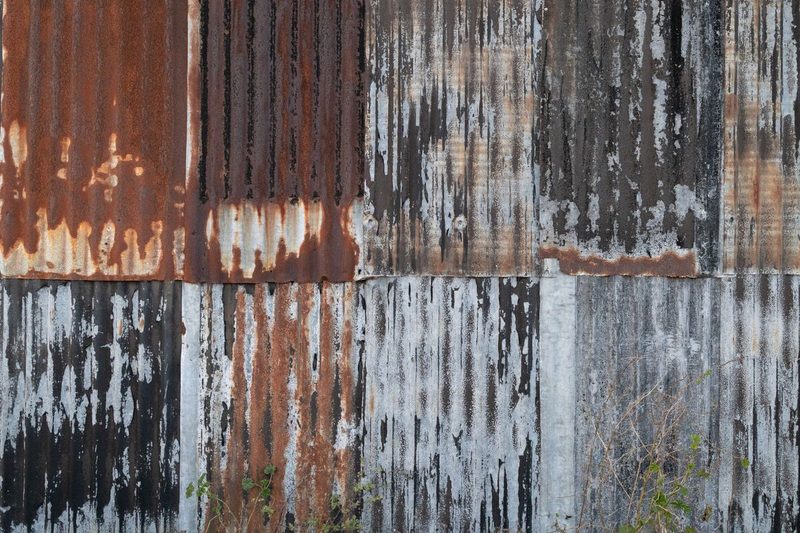
Asbestos cement is porous. It absorbs water, and when that water freezes it expands within the sheet matrix. Fifty or sixty cycles of that per winter, repeated over decades, delaminates the surface. The visible signs in that order: surface becomes chalky and rough, moss establishes in the corrugation troughs, hairline cracks radiate from the fixing holes, then sheets go soft and brittle enough that walking on one is genuinely dangerous.
The Mersey valley's damp also means heavy moss and lichen growth, and this is where people get hurt. Cleaning moss off an asbestos roof with a pressure washer is one of the worst things you can do: it blasts fibres into the air and across the garden in a fine slurry. If the roof needs cleaning that badly, it needs replacing.
Falls through fragile roofs remain one of the leading causes of death in construction, and HSE roof work guidance is blunt about never walking on cement sheeting. Crawling boards spread the load, and a 55-year-old sheet will not support a person regardless.
Choosing a Contractor and What to Ask
Non-licensed asbestos work still requires training, and there's a wide gap between firms that do this properly and firms that treat it as a demolition job.
Ask four things. Does the firm hold non-licensed asbestos awareness and removal training, and can they show the certificates? Do they carry public liability insurance that explicitly covers asbestos work, since many standard policies exclude it? Are they a registered waste carrier who will issue a consignment note? And will the quote state removal, disposal and replacement as separate lines, so you can see the disposal cost rather than have it hidden?
Warrington has a reasonable supply of roofing contractors relative to demand, partly because the town sits within reach of the Manchester and Liverpool labour markets, so you should be able to get three quotes without a long wait. Use that. Prices on this work vary more than on ordinary roofing, and the outliers at both ends tell you something.
Frequently Asked Questions
Is an asbestos garage roof dangerous if I leave it alone?
An intact, undamaged asbestos cement roof releases almost no fibres and is not a health risk in place. The danger comes from breaking, cutting, drilling or pressure-washing it. If it is cracked, crumbling or has holes, it should be dealt with.
Can I remove an asbestos garage roof myself in Warrington?
Legally yes, because bonded cement sheeting is non-licensed work and you can do it on your own home. You must follow HSE method: wet the sheets, remove them whole without breaking, use no power tools, wear FFP3 protection and double-wrap everything for disposal.
How much does asbestos garage roof removal cost in Warrington?
Removal and disposal alone typically runs £550 to £950 for a single garage. Removal with a new roof fitted is £1,300 to £2,200, and full demolition and clearance of an asbestos-roofed garage is £1,600 to £3,400.
Can I put asbestos sheets in a skip?
No. Asbestos must be double-wrapped, labelled and taken to a licensed facility under a hazardous waste consignment note. Warrington Borough Council accepts limited household quantities at its recycling centres by prior arrangement, but never loose and never in a skip.
```json { "@context": "https://schema.org", "@type": "FAQPage", "mainEntity": [ { "@type": "Question", "name": "Is an asbestos garage roof dangerous if I leave it alone?", "acceptedAnswer": { "@type": "Answer", "text": "An intact, undamaged asbestos cement roof releases almost no fibres and is not a health risk in place. The danger comes from breaking, cutting, drilling or pressure-washing it. If it is cracked, crumbling or has holes, it should be dealt with." } }, { "@type": "Question", "name": "Can I remove an asbestos garage roof myself in Warrington?", "acceptedAnswer": { "@type": "Answer", "text": "Legally yes, because bonded cement sheeting is non-licensed work and you can do it on your own home. You must follow HSE method: wet the sheets, remove them whole without breaking, use no power tools, wear FFP3 protection and double-wrap everything for disposal." } }, { "@type": "Question", "name": "How much does asbestos garage roof removal cost in Warrington?", "acceptedAnswer": { "@type": "Answer", "text": "Removal and disposal alone typically runs £550 to £950 for a single garage. Removal with a new roof fitted is £1,300 to £2,200, and full demolition and clearance of an asbestos-roofed garage is £1,600 to £3,400." } }, { "@type": "Question", "name": "Can I put asbestos sheets in a skip in Warrington?", "acceptedAnswer": { "@type": "Answer", "text": "No. Asbestos must be double-wrapped, labelled and taken to a licensed facility under a hazardous waste consignment note. Warrington Borough Council accepts limited household quantities at its recycling centres by prior arrangement, but never loose and never in a skip." } } ] } ```
```json { "@context": "https://schema.org", "@type": "Article", "headline": "Asbestos Garage and Shed Roofs in Warrington: How to Identify Them and What Removal Costs", "description": "Thousands of Warrington garages and sheds still carry corrugated asbestos cement roofs. Here's how to tell what you've got, which jobs are legal to do yourself, what licensed removal costs in 2026, and how disposal actually works in Warrington.", "author": { "@type": "Organization", "name": "The Team" }, "datePublished": "2026-09-18", "dateModified": "2026-09-18", "articleSection": "Roofing" } ```
Ready to work with us?
We're here to help. Give us a call on 01264 554568 or fill out our short form below.