Help With Roof Repair Costs in Warrington: Grants, Council Schemes and What You Can Actually Get in 2026
A roof that has failed does not wait for a good financial moment. A full re-roof on a Warrington semi runs £8,500 to £13,000, a terrace £6,500 to £10,000, and even a significant repair - a re-bedded ridge, a rebuilt valley, new flashings to a chimney - sits at £600 to £2,200. For a household on a fixed income, or one that has just absorbed two years of energy prices, that is not a budgeting exercise, it is a problem with no obvious answer. The honest starting point is that there is no general-purpose government grant for roof repairs in England, and anyone telling you otherwise on the doorstep is selling something. But there are five genuine routes that pay out, several of which are routinely missed, and around one in four households we speak to about affordability turns out to qualify for at least one of them. Here's the full picture, including what to do when none of them fit.
Start Here: Is It Actually an Insurance Claim?
Before looking at any grant, establish whether this is a claim. A meaningful proportion of the roof work homeowners pay for out of pocket would have been covered.
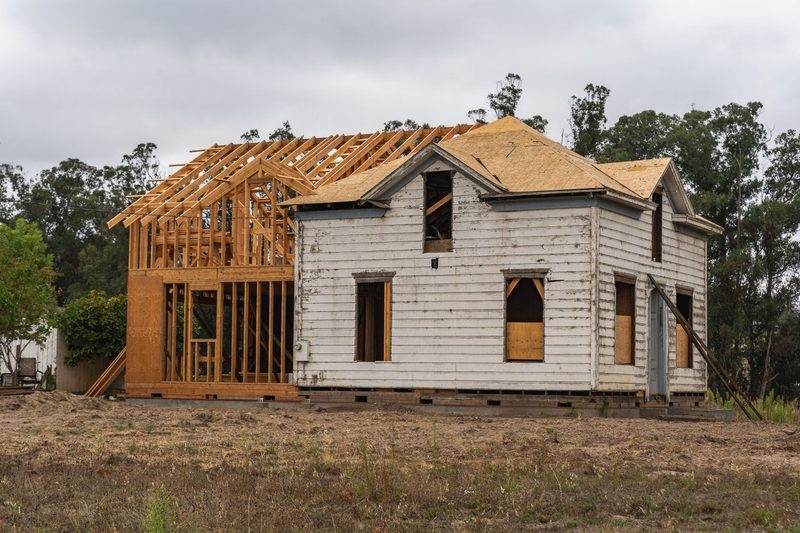
Buildings insurance covers sudden, accidental damage from an insured event - storm, falling trees, impact, fire, escape of water. It does not cover wear, tear and gradual deterioration , which is where most roof problems genuinely sit. The dividing line is what the insurer will argue about.
What typically succeeds:
- Storm damage with recorded wind speeds. Insurers generally apply a threshold around 47 to 55mph. The North West gets named storms most winters, and Warrington regularly records gusts in that band between October and February.
- Tiles or a chimney pot brought down by a specific weather event, with dated evidence
- Impact damage - a tree limb, scaffolding, a neighbour's trampoline
- Escape of water consequential damage, where a roof leak has damaged ceilings and decoration, even where the roof repair itself is excluded
What typically fails: "the roof is 60 years old and has started leaking". That is age, and no policy covers age.
Practical steps that materially improve a claim: photograph everything before any temporary repair, keep the Met Office wind record for the date, get a written contractor's report that attributes the damage to the event rather than to condition, and report it within the policy's notification window, usually 30 days. If a claim is borderline, an independent written inspection of the damage is worth far more to an insurer than a homeowner's description of it.
Disabled Facilities Grants: The Most Overlooked Route
This is the single largest pot of money available, and most people assume it only covers stairlifts and wet rooms.

A Disabled Facilities Grant is administered by Warrington Borough Council and is worth up to £30,000 in England . It is mandatory, not discretionary, which means if you qualify the council must pay. The grant is means tested for adults but not means tested where the application is for a child under 18.
The link to roofing is indirect but real. A DFG funds work needed to make a home safe and suitable for a disabled occupant. Where a roof defect is causing damp or cold that materially affects a disabled person's health or the usability of adapted rooms, roof work can be included as part of the scheme of works. It will not fund a re-roof on its own for aesthetic or general improvement reasons, but it regularly funds:
- Roof and gutter repairs where damp is affecting a room being adapted
- Structural work needed to install a through-floor lift or a loft-level adaptation
- Insulation and ventilation improvements where cold or condensation is a health issue
The process is an occupational therapist assessment first, then a technical survey, then approval. It takes months, not weeks, so it suits a deteriorating situation rather than an emergency. Councils also hold discretionary powers to top up or vary assistance beyond the mandatory grant, and Warrington's private sector housing team is the route to ask.
Where a Guarantee Might Already Cover It
Before paying for anything, check what you may already be owed. If the roof was replaced in the last 10 to 20 years, there may be a live guarantee - and if the property is a new build, the NHBC position is different again and often more generous than owners realise. We've set out how that works in our guide to new-build roof problems in Warrington, snagging faults and NHBC claims, which is the first thing to read if your house is under 12 years old.
Insurance-backed guarantees, the kind underwritten by a third party rather than just promised by the contractor, survive the contractor going out of business. A contractor's own guarantee does not. Dig out the paperwork before you dig out the chequebook.
ECO4 and the Great British Insulation Scheme
These are energy efficiency schemes funded by obligated energy suppliers rather than by the council, and they are the main route to free or heavily subsidised work for lower-income households.
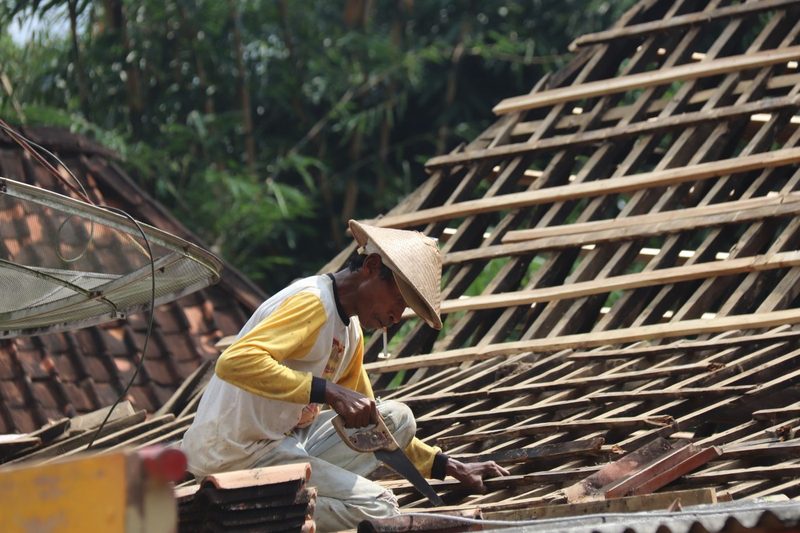
ECO4, administered under Ofgem's oversight, funds a whole-house package - insulation, heating, ventilation - for eligible households. Eligibility runs on either benefit receipt (Universal Credit, Pension Credit, Child Tax Credit and several others) or local authority flexible eligibility, where the council can nominate households on low income or in fuel poverty even without a qualifying benefit.
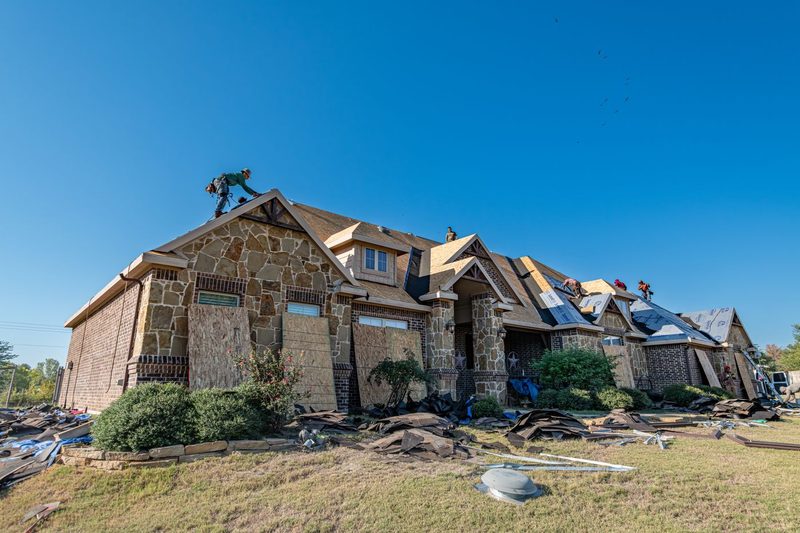
The important detail for roofing: ECO4 funds loft insulation and roof insulation, and it funds "enabling works" . Where a roof defect means insulation cannot be installed or would be immediately compromised - active leaks, failed underlay, inadequate ventilation causing condensation - the remedial roof work can be funded as an enabling measure. It will not pay for a new roof covering because the tiles look tired, but it will pay to make a roof fit to insulate.
Typical figures under these schemes: loft insulation top-up to 300mm at no cost where eligible, ventilation improvements £300 to £900 covered, enabling repairs assessed case by case. A household in a solid-wall Warrington terrace on Universal Credit can realistically access several thousand pounds of work.
Two cautions. First, only deal with installers certified under the scheme and registered with TrustMark- ECO4 requires it, and cold callers claiming "government grants" frequently are not. Second, an ECO4 package is designed around energy performance, not around your roof's condition. It is not a substitute for a re-roof that is genuinely due.
Council Assistance, Loans and Hardship Routes
Beyond DFGs, local authorities hold discretionary powers under housing renewal policies. These vary and budgets are finite, but Warrington homeowners have several avenues worth asking about.
- Discretionary housing assistance for urgent repairs affecting health and safety, typically for owner-occupiers on low incomes. Often structured as a grant for small amounts and an equity-charge loan for larger ones.
- Home improvement agency support. Many areas have an agency that helps older and vulnerable homeowners access funding and manage contractors. This service is often free and is genuinely useful if managing a project feels beyond you.
- Equity release or a charge on the property. Some assistance is repayable when the property is sold rather than monthly, which suits asset-rich, income-poor households. Take independent advice first - a charge on the deeds is a significant step.
- Charitable grants. Regional and occupational charities, armed forces benevolent funds, and trusts aimed at older people all fund essential home repairs. These are rarely advertised and often under-applied for.
- Council Tax and benefit checks. Not roof money directly, but a substantial number of households are underclaiming Pension Credit or Attendance Allowance, which changes both income and ECO eligibility.
Start with the council's private sector housing or housing standards team and ask specifically what discretionary assistance is available for essential external repairs. Ask in writing, and ask what the current year's budget position is.
Why Warrington Roofs Fail When They Do
Understanding the local pattern helps with both insurance arguments and prioritisation.

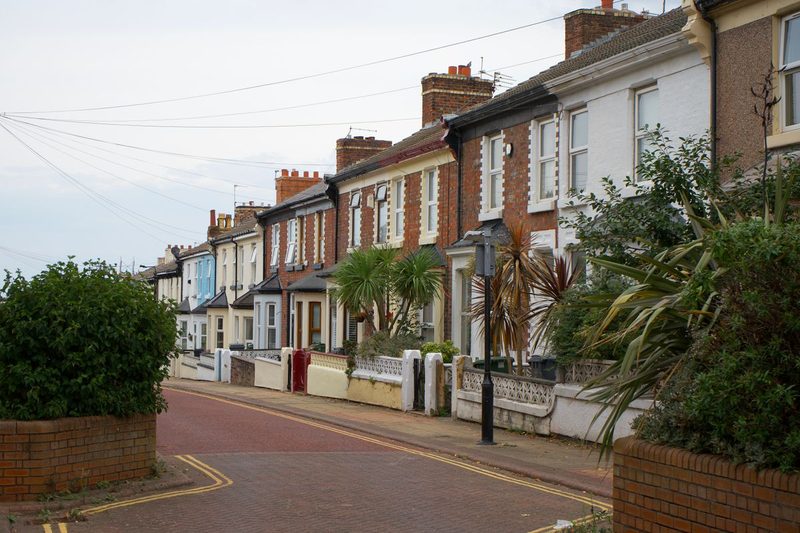
Warrington's housing stock is heavily weighted towards two periods that are both hitting roof end-of-life at once. The Victorian and Edwardian terraces around the town centre, Latchford and Bewsey carry natural slate on nailed battens - the nails corrode long before the slate wears out, which is why slates slip in twos and threes rather than the roof failing all at once. Then there is the enormous 1960s to 1980s expansion at Birchwood, Padgate, Westbrook and Callands, largely concrete interlocking tile with a bitumen felt underlay. Those felts have a practical life of 30 to 40 years, which means a very large number of Warrington roofs crossed that line somewhere in the last decade.
The climate does not help. The North West receives roughly 850mm to 1,000mm of rain a year, well above the England average of around 800mm, spread across 140 to 160 wet days. Prevailing westerlies come in off the Irish Sea with little to slow them across the Cheshire plain. Warrington also sits in a mild, damp corridor between the Mersey and the Manchester Ship Canal, which keeps humidity high and makes moss growth aggressive - moss holds water against the tile surface and accelerates freeze-thaw damage on concrete tiles that have lost their surface coating.
The labour market matters too. The Construction Industry Training Board has consistently identified roofing as a shortage occupation, and the North West's roofing capacity is stretched by large-scale commercial work around Warrington and the Liverpool-Manchester corridor. In practice that means genuine contractors are booked out two to six weeks in normal conditions and considerably longer after a storm - which is exactly why the van that can start tomorrow morning is a warning sign, not a stroke of luck.
If None of It Applies: Reducing the Bill Legitimately
Most households will not qualify for any of the above, and the realistic question becomes how to spend less without buying a bad job.
- Repair rather than replace, where honest. A roof with sound timbers, sound tiles and failed underlay at the eaves does not always need stripping. Ridge, verge and flashing work plus localised repairs can buy 5 to 10 years for £1,200 to £3,000 against £10,000 for a re-roof. Ask directly for both options priced.
- Phase it. Do the elevation that is failing now, and the other next year. Scaffold is the inefficiency here, so phase by elevation rather than by task.
- Share scaffold with a neighbour. On a terrace, two adjoining owners doing work simultaneously can split an access cost of £1,000 to £2,000. This is the single biggest saving available on a terrace and almost nobody does it.
- Book out of season. January to March is quieter than September to November. Discounts are modest but real.
- Get three itemised quotes and compare the specification, not the total. A £7,000 and a £10,000 quote for "a new roof" are often not the same roof - check underlay type, batten treatment, whether dry ridge and verge systems are included, and whether the guttering and fascias are in or out.
- Do not pay a large deposit. 10% to 25% against the material order is normal. Half up front is not.
The grimmest maths in roofing is that deferring a £900 repair for three winters routinely turns it into a £4,000 one, because water that gets into battens and rafters keeps working when nobody is looking. If money is the constraint, the cheapest available action is almost always the smallest competent intervention now, rather than waiting for the budget for the complete job.
Frequently Asked Questions
Is there a government grant for roof repairs in Warrington?
There is no general roof repair grant. The genuine routes are a Disabled Facilities Grant through Warrington Borough Council (up to £30,000 where a disabled occupant's needs are affected), ECO4 energy efficiency funding where a roof defect prevents insulation, buildings insurance for storm or impact damage, an existing guarantee or NHBC cover, and discretionary council assistance. Anyone cold-calling about a "government roof grant" is selling, not helping.
Will my insurance pay for a new roof?
Only where the damage was caused by a sudden insured event such as a storm, impact or fire. Insurers exclude wear and tear and gradual deterioration, so an old roof that has begun to leak is not covered. Storm claims are strongest with dated photographs, a Met Office wind record for the day, and a contractor's report attributing the damage to the event.
Can ECO4 pay for roof work?
Indirectly, yes. ECO4 funds loft and roof insulation plus enabling works, so where a leak, failed underlay or inadequate ventilation would prevent insulation being installed or would immediately compromise it, that remedial work can be funded. It will not replace a roof covering purely because it is old. Use only TrustMark-registered, scheme-certified installers.
What does a roof repair cost in Warrington?
As a 2026 guide, £600 to £2,200 for significant repairs such as ridge re-bedding, valley rebuilds or chimney flashings, £6,500 to £10,000 for a full terrace re-roof, and £8,500 to £13,000 for a semi. Scaffold is typically £800 to £2,000 of that, which is why phasing by elevation rather than by task saves money.
Can I split scaffolding costs with a neighbour?
Yes, and on a terrace it is the largest single saving available. Two adjoining owners having work done at the same time can share an access cost of £1,000 to £2,000. It needs coordinating between both contractors, but it is straightforward and very rarely done.
```json { "@context": "https://schema.org", "@type": "FAQPage", "mainEntity": [ { "@type": "Question", "name": "Is there a government grant for roof repairs in Warrington?", "acceptedAnswer": { "@type": "Answer", "text": "There is no general roof repair grant. The genuine routes are a Disabled Facilities Grant through Warrington Borough Council (up to 30,000 pounds where a disabled occupant's needs are affected), ECO4 energy efficiency funding where a roof defect prevents insulation, buildings insurance for storm or impact damage, an existing guarantee or NHBC cover, and discretionary council assistance. Anyone cold-calling about a government roof grant is selling, not helping." } }, { "@type": "Question", "name": "Will my insurance pay for a new roof?", "acceptedAnswer": { "@type": "Answer", "text": "Only where the damage was caused by a sudden insured event such as a storm, impact or fire. Insurers exclude wear and tear and gradual deterioration, so an old roof that has begun to leak is not covered. Storm claims are strongest with dated photographs, a Met Office wind record for the day, and a contractor's report attributing the damage to the event." } }, { "@type": "Question", "name": "Can ECO4 pay for roof work?", "acceptedAnswer": { "@type": "Answer", "text": "Indirectly, yes. ECO4 funds loft and roof insulation plus enabling works, so where a leak, failed underlay or inadequate ventilation would prevent insulation being installed or would immediately compromise it, that remedial work can be funded. It will not replace a roof covering purely because it is old. Use only TrustMark-registered, scheme-certified installers." } }, { "@type": "Question", "name": "What does a roof repair cost in Warrington?", "acceptedAnswer": { "@type": "Answer", "text": "As a 2026 guide, 600 to 2,200 pounds for significant repairs such as ridge re-bedding, valley rebuilds or chimney flashings, 6,500 to 10,000 pounds for a full terrace re-roof, and 8,500 to 13,000 pounds for a semi. Scaffold is typically 800 to 2,000 pounds of that, which is why phasing by elevation rather than by task saves money." } }, { "@type": "Question", "name": "Can I split scaffolding costs with a neighbour?", "acceptedAnswer": { "@type": "Answer", "text": "Yes, and on a terrace it is the largest single saving available. Two adjoining owners having work done at the same time can share an access cost of 1,000 to 2,000 pounds. It needs coordinating between both contractors, but it is straightforward and very rarely done." } } ] } ```
```json { "@context": "https://schema.org", "@type": "Article", "headline": "Help With Roof Repair Costs in Warrington: Grants, Council Schemes and What You Can Actually Get in 2026", "description": "There is no general roof repair grant, but there are five routes that genuinely pay out for Warrington homeowners - disabled facilities grants, ECO4, insurance, warranties and council assistance. Here's who qualifies for what, and what to do if none of them apply.", "author": { "@type": "Organization", "name": "The Team" }, "datePublished": "2026-09-22", "dateModified": "2026-09-22", "articleSection": "Roofing" } ```
Ready to work with us?
We're here to help. Give us a call on 01264 554568 or fill out our short form below.