Solar Panels and Your Warrington Roof: Checks Before You Install
Solar panels are going up across Warrington faster than almost any other home improvement, but the roof underneath rarely gets the same attention as the panels themselves. Around 1.4 million UK homes now have solar PV, and installers report Warrington and the wider North West among the fastest-growing areas for uptake as electricity prices stay high. A standard 10-panel domestic array adds roughly 350-400kg to a roof once you include the mounting frame. Most UK roofs handle that without issue. Not all of them do. Warrington's mix of Victorian terraces, 1960s and 70s ex-council semis, and newer estates around Chapelford and Westbrook each raise a different question before a panel goes anywhere near the tiles. This guide walks through the checks worth making on a Warrington roof before you sign off on solar, and where re-roofing first can save you paying twice.
Why Warrington's Housing Stock Changes the Solar Conversation
Warrington was designated a New Town in 1968, and a huge share of its housing dates from that expansion through the 1970s and 80s - semis and terraces around Padgate, Fearnhead, Orford, and Birchwood built to the standards of their era rather than today's. Roughly 4 in 10 Warrington homes were built before 1980, which matters because roof structures, felt, and batten spacing from that period were never designed with a 20kg-per-square-metre solar array in mind.
That's not a reason to rule solar out - it's a reason to get the roof checked properly first rather than assuming a modern installer's rack system will simply bolt on. If you want a straight answer on whether your particular roof is a good candidate before you even call a solar company, Northwest Roofing Contractors can assess the roof itself - structure, covering, and age - separately from the panels, which gives you a second opinion the solar installer has no reason to offer.
Newer estates fare differently again. Chapelford, Westbrook, and Omega Boulevard properties built since the 2000s generally have trussed roofs designed to modern loading standards, so the structural question is usually a formality. The real variable there tends to be roof orientation and pitch, covered further down.
How Old Is Too Old? Checking Roof Condition Before Anything Else
Age on its own doesn't disqualify a roof from solar, but it does mean more checking. A roof covering with under 10 years of remaining life is the single biggest reason installers turn a job down or recommend waiting, because nobody wants to pay to remove and refit a solar array in five years' time to fix a roof that should have been sorted first.
Look for the same signs a surveyor would flag on any pre-purchase inspection: slipped or cracked tiles, sagging felt visible from the loft, and daylight or damp staining around the rafters. Concrete tiles from the 1970s and 80s - common across Warrington's New Town estates - typically last 40-50 years, which puts a good number of local roofs into the "check carefully" bracket right now rather than the "obviously fine" one.
Getting an Honest Answer, Not a Sales Pitch
The awkward truth is that most solar companies aren't roofing companies, and their structural check can be a five-minute visual glance rather than a proper assessment. A local roofer who's independent of the solar sale has no incentive to either wave problems through or invent ones to sell you work, which is worth factoring in if the quote you've been given skipped straight past this step.
Weight Loading: Can Your Roof Structure Actually Take It
This is the check that gets skipped most often, and it's the one that matters most. A typical panel weighs 18-20kg, and a full domestic array with its aluminium mounting rails adds roughly 15-20kg per square metre of roof once distributed - similar to a heavy snow load, which UK roofs are built to tolerate, but not infinite headroom on top of it.
MCS-certified installers are required to carry out a structural assessment as part of a compliant installation, checking rafter size, spacing, and condition against the specific panel and mounting system proposed - guidance set out in the MCS installer standards for solar PV, which every legitimate UK solar company should be working to. If an installer skips this step or treats it as a tick-box, that's a red flag regardless of how competitive the quote is.
Older Warrington roofs with timber that's been through 50 winters of the North West's wet weather are the ones where this check earns its keep. A loft inspection can reveal rafters that look fine from below but have lost strength to old damp or historic woodworm treatment that was never followed up.
Roof Orientation, Pitch and Warrington's Weather
Panel output depends heavily on which way your roof faces and how steep it is, and this is where Warrington's climate genuinely changes the sums. South-facing roofs pitched between 30 and 40 degrees get the best return, generating up to 15-20% more electricity over a year than an east or west-facing equivalent. A north-facing roof isn't necessarily a dead end, but the payback period stretches considerably.
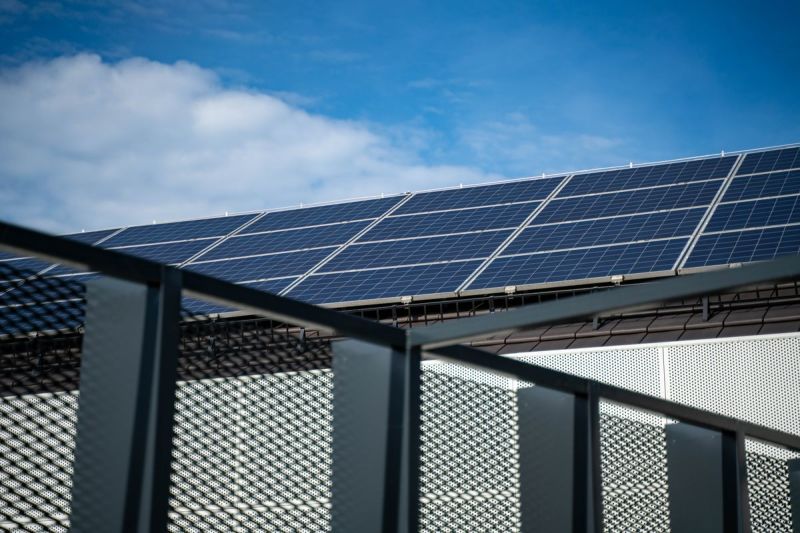
Warrington sits under fairly typical North West cloud cover - noticeably greyer than the south-east - so orientation matters more here than it would in a sunnier part of the country, because there's less headroom to waste on a poor angle. A well-positioned system still performs solidly despite the cloud; a badly-positioned one on the same roof can take years longer to pay for itself.
Related Reading: Deciding Between Repair and Replacement First
If your roof covering is getting on and you're weighing up whether it needs sorting before solar goes anywhere near it, our guide on roof repair versus replacement in Warrington walks through exactly how to make that call, including the age and condition thresholds where replacement wins out financially.
Should You Re-Roof Before You Go Solar?
If a roof survey turns up a covering with fewer than 10-15 years of life left, re-roofing first is almost always the cheaper path overall, even though it feels like a bigger spend upfront. Removing and refitting a solar array to get at the roof underneath typically costs £800-£1,500 in labour alone, on top of whatever the re-roof itself costs - money that buys you nothing extra once it's paid.
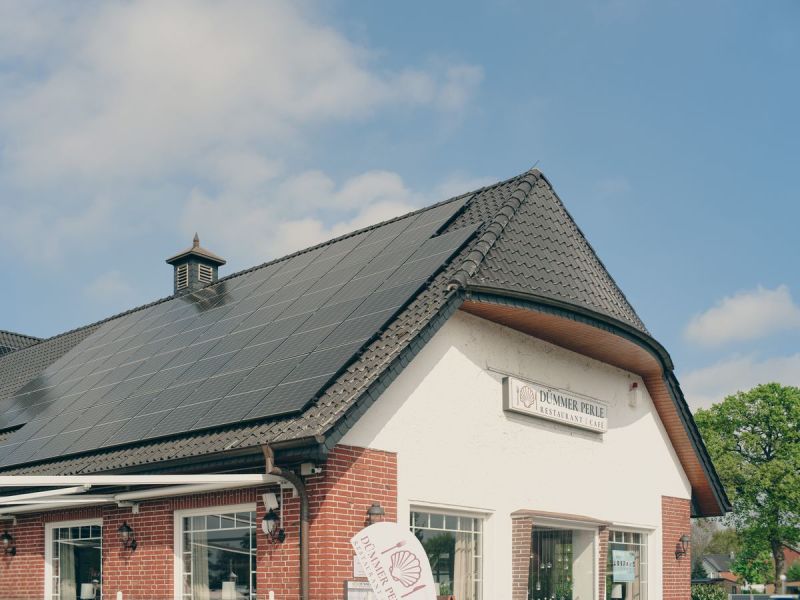
Doing both together also means the roofer and the solar installer can coordinate on batten spacing, breathable membrane placement, and exactly where the mounting brackets will sit, rather than the solar team working around whatever's already there. Some Warrington homeowners are now timing a re-roof and solar install as a single project for this reason, splitting costs across two trades but avoiding the double-labour trap entirely.
The maths tips the other way on a roof with genuine life left in it. A covering with 20-plus years ahead of it and no structural concerns rarely needs anything beyond the standard pre-install check, and there's no reason to spend on a re-roof that isn't needed yet.
Finding a Competent Installer in a Tight Trades Market
Warrington and the wider Cheshire and Merseyside area have seen solar installer numbers grow fast to meet demand. That's good for choice, but it also means newer, less experienced firms are competing for jobs alongside established roofers who've added solar to their services. A rough industry rule of thumb puts snagging issues - loose flashing, a poorly sealed cable entry, a bracket in the wrong place - at somewhere around 1 in 4 installs in the first two years, and most of that traces back to roof preparation rather than the panels themselves.
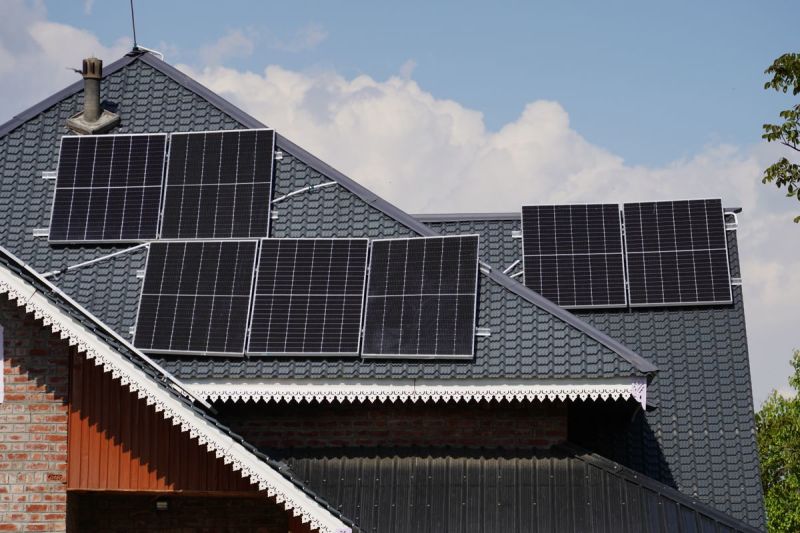
Check that any installer is MCS-certified, since this is required for eligibility for the Smart Export Guarantee payments you get for electricity you sell back to the grid, and cross-reference their roofing credentials separately - the National Federation of Roofing Contractors is a useful starting point for verifying that the roofing side of a combined installer is genuinely competent, not just the electrical side.
Get at least two independent quotes, and ask specifically whether the structural assessment includes a loft inspection or is done from the ground. A firm that can't answer that clearly is one to be cautious of.
Planning Permission and Building Regulations for Solar in Warrington
Most rooftop solar installs in Warrington fall under permitted development, meaning no planning application is needed provided panels don't project more than 0.2 metres from the roof slope and sit below the highest point of the roof. Full detail on the conditions is set out in the Planning Portal's guidance on solar panels, which is worth a five-minute read before you assume your install is automatically exempt.
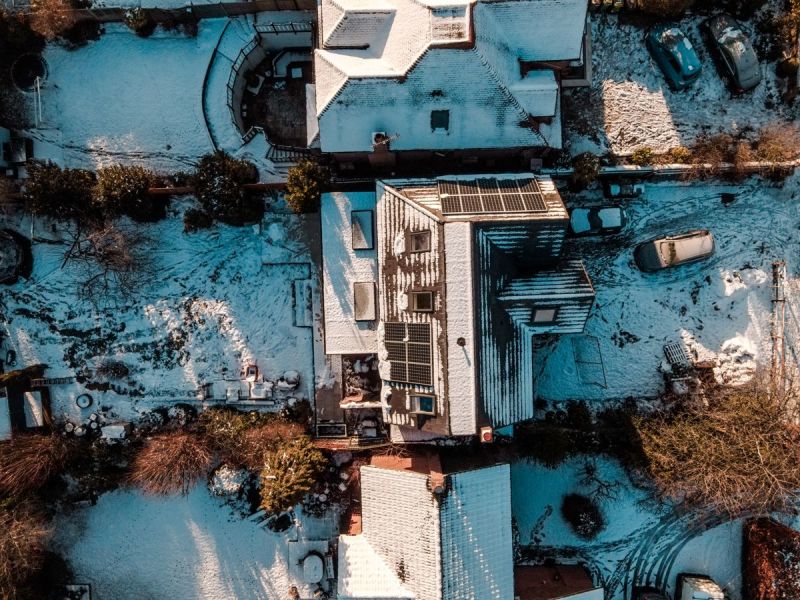
The exceptions worth knowing locally are listed buildings and properties in a conservation area - Warrington has several, including parts of the town centre and Stockton Heath - where permitted development rights don't apply and a full planning application is required regardless of how small the array is. If you're unsure whether your property falls inside one, it's worth a quick check with Warrington Borough Council before ordering anything.
Building regulations sign-off is separate from planning permission and still applies even where planning permission isn't needed, covering the structural loading and electrical work. A competent MCS installer handles this as standard, but it's worth confirming it's included rather than assumed.
FAQ
Q: Do I need planning permission for solar panels in Warrington? A: Most homes don't. Solar panels usually fall under permitted development, meaning no planning application is needed as long as they don't project more than 0.2 metres from the roof slope and stay below the highest point of the roof. Listed buildings and homes in a conservation area - including parts of Warrington town centre and Stockton Heath - are the main exceptions and do need full planning permission.
Q: How much weight do solar panels add to a roof? A: A typical panel weighs 18-20kg, and a full domestic array with its mounting rails adds roughly 15-20kg per square metre once the load is spread across the roof - broadly comparable to a heavy snow load. MCS-certified installers are required to check rafter size, spacing, and condition against this before fitting, which is why a proper structural assessment matters more than a five-minute visual look.
Q: Should I replace my roof before installing solar panels? A: If your roof covering has fewer than 10-15 years of life left, yes - re-roofing first is almost always cheaper than paying to remove and refit a solar array later, which typically costs £800-£1,500 in labour alone on top of the re-roof itself. A roof with 20-plus years of life left and no structural issues rarely needs anything beyond the standard pre-install check.
Q: Does roof orientation really make a big difference to solar output in Warrington? A: Yes. A south-facing roof pitched between 30 and 40 degrees can generate up to 15-20% more electricity over a year than an east or west-facing equivalent. Warrington's cloud cover is fairly typical for the North West, which makes getting the orientation and pitch right more important here than in sunnier parts of the country, since there's less margin to make up for a poor angle.
Ready to work with us?
We're here to help. Give us a call on 01264 554568 or fill out our short form below.