
Loft Condensation in Warrington: Roof Ventilation Causes, Fixes and 2026 Costs
Most people who ring us about a wet loft in Warrington are sure the roof is leaking. Often it isn't. The water is coming from inside the house. A family of four puts something like 10 to 12 litres of moisture into the air every day from showers, cooking, drying clothes and breathing, and some of that finds its way up into the loft. If the roof can't breathe, it condenses on the coldest surface it meets, usually the underside of the felt or the tips of the nails. Warrington makes this worse than average. The town sits low in the Mersey valley, winter humidity regularly runs above 85%, and there are roughly 40 to 50 frosty nights a year when the roof space drops below dew point. Loft condensation is one of the most common winter callouts we get, and in most cases better roof ventilation is the cure.
Is It Loft Condensation or a Roof Leak? How to Tell the Difference
Before you pay for any work, it's worth working out which problem you've actually got. A leak leaves a localised wet patch, normally below a chimney, valley, skylight or broken tile, and it gets worse after heavy rain. Condensation is spread out. You'll see damp across a wide area of the felt or the roof timbers, and it shows up on cold, still, dry nights, often when it hasn't rained for days. If you're unsure, our team at Northwest Roofing Contractors can come out and tell you which one it is before you spend anything.
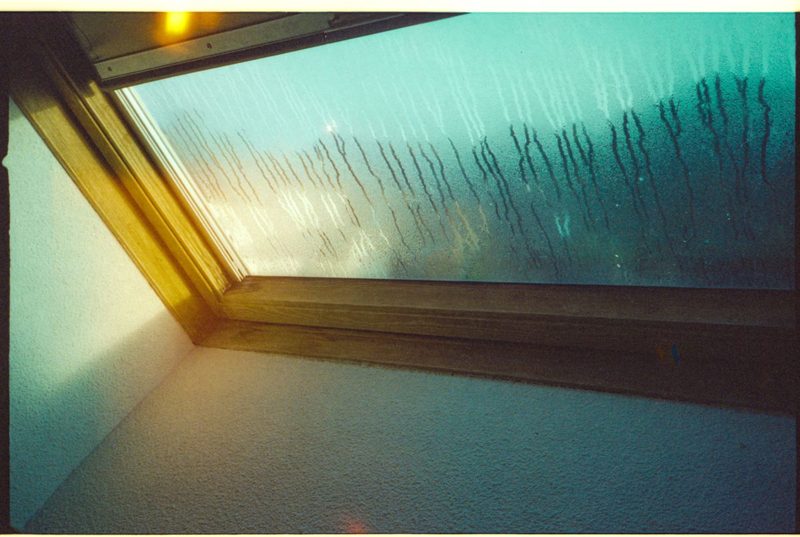
The timing gives it away too. Condensation peaks between November and March, and it's usually at its worst first thing in the morning after a clear, frosty night. And it usually starts after something in the house has changed. A loft insulation top-up, a new bathroom or a re-roof is the trigger in most of the cases we're called to, typically within the first winter or two.
Here are the classic signs to look for with a torch:
- Water droplets hanging from the points of roofing nails or the felt
- Black or grey speckled mould on the rafters, mostly on the north-facing slope
- Damp, rusty-looking stains along the underside of the felt
- Wet insulation, or a musty smell as soon as you open the hatch
- Frost on the inside of the felt on very cold mornings
Why Warrington's Climate Is Hard on Loft Spaces
Warrington gets around 830mm of rain a year, a little under the UK average, but the bigger problem for lofts is damp air rather than rain. Because the town is low-lying and close to the Mersey and the Manchester Ship Canal, it gets plenty of mist and fog in autumn and winter. Relative humidity outdoors often sits at 85 to 90% from October to February, so the air coming into the loft is already close to saturated before the house adds anything to it.

Winters here are a bit milder than the Pennine towns to the east, but the cold season is long. Overnight temperatures fall below 5°C on roughly 100 nights a year, which is plenty of time for a poorly ventilated loft to build up moisture. When that happens night after night, timbers that should sit at 12 to 15% moisture content can climb above 20%. That's the point where mould takes hold and, over several years, rot becomes a real risk.
The housing stock makes a difference
Warrington has a mix of 1930s semis around Latchford and Stockton Heath, 1960s and 70s estates, and a lot of 1980s and 90s new-town housing in Birchwood, Westbrook and Callands. Many of the older and mid-century homes still have their original bitumen felt, which doesn't let any moisture through. Most of the new-town houses rely on small soffit vents that are often painted over or blocked by insulation. Each type goes wrong in its own way, so it helps to know which one you live in.
The Three Main Causes of Loft Condensation in Warrington Homes
When we survey a damp loft, nearly every case comes down to one of three things, and often two of them at once.
1. Insulation pushed into the eaves
This is the one we find most. Recommended loft insulation depth has gone up to 270mm, and when installers lay that much quilt they often push it right down into the eaves. That blocks the gap where fresh air is meant to come in from the soffits. With no air moving, moist air just sits in the loft. Rushed grant-funded top-ups are a frequent culprit.
2. Non-breathable felt under the tiles
Older roofs, and plenty re-roofed before about 2000, use traditional bitumen felt (often called Type 1F). It keeps rain out well but stops vapour escaping. That works fine as long as the loft has proper vents at the eaves and ridge. Take those away, or block them with insulation, and the felt turns into a cold, wet surface for vapour to settle on. Modern breathable membranes let vapour pass through while still keeping rain out, which is why most new roofs use them.
3. Bathroom and kitchen fans venting into the loft
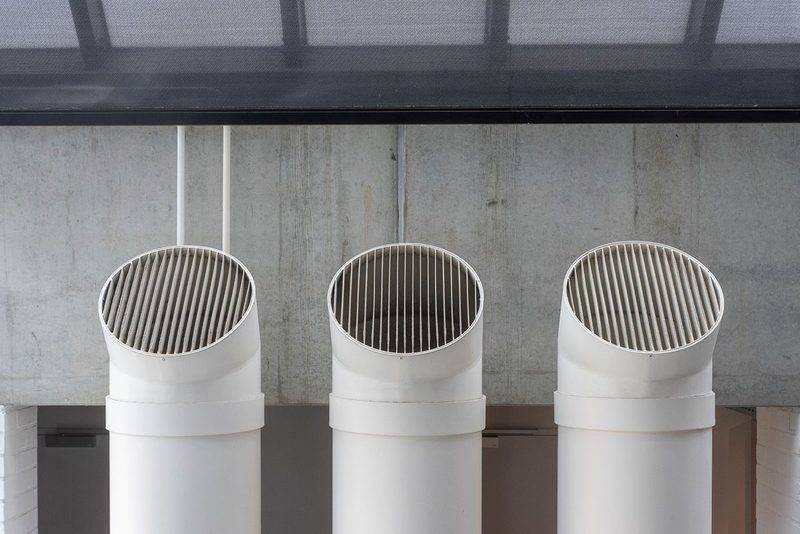
This one surprises people. We regularly find extractor fans with the ducting just left lying on the loft floor, or blowing into the eaves, so every shower pumps warm, wet air straight into the roof space. A single 10-minute shower can release around 0.5 litres of water vapour. Approved Document F of the Building Regulations on ventilation expects bathroom extract to go to the outside, at a rate of at least 15 litres per second for an intermittent fan. A fan that dumps into the loft doesn't meet that.
What Loft Condensation Does to Your Roof if You Leave It
A bit of moisture on the felt for one winter won't bring the roof down, but it adds up. Dripping nails rust, and rusty nails let tiles and battens slip. Wet mineral wool insulates far worse than dry, so your heating bills creep up as well.
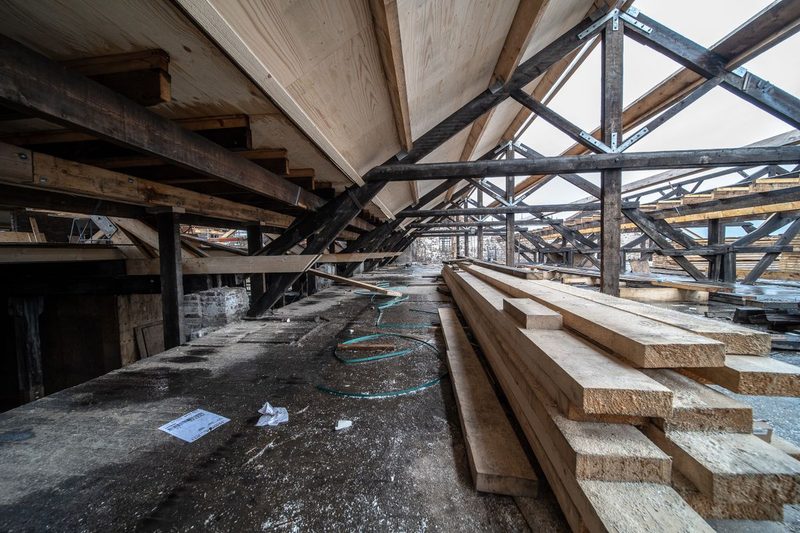
Mould is the more obvious problem. Black mould on rafters is mostly a surface stain at first, but spores travel, and a damp loft can feed mould on bedroom ceilings below. The government's guidance on the health risks of damp and mould is aimed at landlords, but it's worth a read for anyone with children, older relatives or asthma in the house.
Over time, constantly damp timber can develop wet rot, especially at the feet of rafters and along wall plates where water drips down. Replacing a section of rotten rafter and wall plate typically costs £600 to £1,500, which is far more than most ventilation fixes.
Roof Ventilation Fixes That Actually Work
The principle is simple: air in low, air out high. The British Standard for this, BS 5250, generally calls for a continuous 10mm gap at the eaves on pitched roofs over 15°, or 25mm on shallower pitches, plus high-level ventilation at the ridge on steeper or wider roofs. Not every Warrington house needs every fix below, so a proper survey matters.

Clearing the eaves and fitting eaves vents
Often the first job is simply pulling insulation back from the eaves and fitting rafter trays (sometimes called eaves ventilation trays) so it can't slump back and block the airflow. If the soffits have no vents, or tiny ones, we fit continuous soffit vents or over-fascia vents. This alone sorts out a large share of cases, especially in new-town homes where the vents were there but have been smothered.
Tile vents and ridge vents
Tile vents replace individual tiles with a vented version, letting moist air escape near the top of the roof. Four to eight tile vents is typical for a semi. Where the ridge needs repointing anyway, a dry ridge system with built-in ventilation is a sensible upgrade because it fixes the mortar problem and adds a continuous high-level vent in one go.
Rerouting fans
Any extractor fan dumping into the loft should be ducted properly to the outside, either through a dedicated tile vent, a soffit outlet or a wall. Insulated ducting is worth the small extra cost, because cold, uninsulated ducting can create its own condensation and drip back down into the fan.
When a breathable membrane makes sense
Swapping bitumen felt for a breathable membrane only makes sense when the tiles are coming off anyway, as part of a re-roof. If your roof is otherwise sound, adding vents is far cheaper and usually works just as well. We've covered the insulation side in more detail in our guide to roof insulation and energy efficiency in Warrington homes, which is worth reading alongside this one if you're planning a top-up.
Roof Ventilation and Condensation Costs in Warrington for 2026
These are typical prices for a three-bed semi in Warrington, including labour and VAT. Your quote will depend on roof size, access and how much damage the moisture has already caused.

- Loft survey and moisture readings: £120 to £250
- Pulling back insulation and fitting rafter trays: £150 to £450
- Continuous soffit or over-fascia vents: £300 to £800
- Tile vents: £80 to £150 each fitted, usually £400 to £1,000 in total
- Dry ridge with ventilation (semi-detached): £1,000 to £2,000
- Ducting a bathroom fan out through a tile vent: £150 to £350
- Mould treatment on rafters and felt: £250 to £600
- Full re-roof with breathable membrane: £8,000 to £14,000
Most homeowners spend between £500 and £1,500 to cure condensation for good. Ignore the re-roof figure unless the roof needs replacing for other reasons anyway.
Finding someone to do it properly
Warrington, like most of the North West, is short of experienced roofers. The Construction Industry Training Board has warned for years that the UK isn't training enough roofers to replace those retiring, and good local firms are often booked two to four weeks out from October onwards. Book a survey in early autumn if you can, before the first hard frosts. When you're comparing contractors, membership of a trade body such as the National Federation of Roofing Contractors is a good sign that the firm works to recognised standards.
Simple Things You Can Do Today
While you wait for a survey, a few changes inside the house can cut the moisture reaching the loft by a noticeable amount. Run the bathroom fan for 15 to 20 minutes after every shower and keep the door shut while you do. Put lids on pans, and dry washing outdoors or in a vented tumble dryer rather than on radiators, which can add 2 litres of water to the air per load.

Check the loft hatch too. A hatch with no draught seal lets warm, moist air pour straight up. A seal kit costs under £20 and takes ten minutes to fit. None of this cures a badly ventilated roof. It just buys you time.
Common Questions About Loft Condensation in Warrington
Is condensation in the loft normal in winter?

A small amount on the coldest mornings can happen in any loft, but it should dry out within a day or two. If you're seeing dripping nails, wet insulation or black mould, the roof isn't ventilating properly and it needs looking at.
Will more loft insulation stop condensation?
No, it often makes it worse. Thicker insulation makes the loft colder, so moisture condenses more easily, and if it's pushed into the eaves it blocks the airflow. Insulation and ventilation have to be done together.
How many tile vents does my roof need?
It depends on the size and shape of the roof, but a typical Warrington semi needs four to eight, spread evenly across both slopes near the ridge. A roofer should work it out from the roof area rather than guessing.
Do I need building regulations approval to add roof vents?
Adding tile vents, soffit vents or a ventilated ridge to an existing house doesn't usually need approval. If the work is part of a re-roof covering more than 25% of the roof, Building Regulations apply, and a competent roofer will handle that for you.
Ready to work with us?
We're here to help. Give us a call on 01264 554568 or fill out our short form below.